Baby motor skills course: 12 ideas to set up at home, from 6 months to 3 years
A motor skills course is a series of small obstacles that your baby tackles at their own pace: crawling through a tunnel, climbing onto a cushion, going down a slope, keeping their balance. No need for a gym: with cushions, a few cardboard boxes and a stable structure, you can set up a course in the living room in ten minutes. Here are 12 ideas sorted by age, the useful equipment and the safety rules to know.
- Why offer your baby a motor skills course?
- From 6 to 12 months: crawling and pulling up
- From 12 to 18 months: walking, climbing, coming down
- From 18 months to 3 years: sliding, jumping, balancing
- An outdoor course
- Which equipment: homemade, foam or wood?
- Safety rules
- Changing the course over time
Why offer your baby a motor skills course?
A motor skills course works on gross motor skills: the big movements of the body, such as crawling, standing up, walking or climbing. By getting past each obstacle, the child refines their balance, coordination and awareness of their body in space. They also learn to assess a risk: is this step too high? Should I come down backwards?
This is the spirit of free movement: we never place a child in a position they cannot reach on their own, we offer an environment that invites them to try. The course has no imposed order. Your baby explores, starts again, goes around, and that is exactly what helps them progress.
- Balance and coordination: every step is a small experiment.
- Self-confidence: getting past an obstacle alone makes them want to try another.
- Concentration: an obstacle at their level captures all their attention.
- Burning off energy: precious on rainy days.
| Age | What your baby can do | Course ideas |
|---|---|---|
| 6-12 months | Crawl, get on all fours, pull up to standing | Chair tunnel, gentle slope, cushions to climb over |
| 12-18 months | Walk, go up and down a small height | Cushion staircase, first arch, texture path |
| 18 months-3 years | Climb, slide, jump, keep their balance | Arch and slide, floor beam, jumping into hoops |
From 6 to 12 months: crawling and pulling up
1. The chair tunnel
Line up two or three chairs and cover them with a sheet: you have a tunnel to crawl through. Put a toy at the exit to make them want to move forward. For a baby who is not crawling yet, a sheet stretched low is enough to create a surprise.
2. The gentle slope
Slip a firm cushion or a pillow under a thick rug: you get a small slope to go up and down. Your baby discovers that their body slides and that they need to adjust their support.
3. Cushions to climb over
Lay sofa cushions flat, a few centimetres apart. Crossing them on all fours means lifting the knees and shifting their weight: an excellent exercise before walking.
4. A low piece of furniture to pull up on
A stable pouffe or a coffee table with protected corners invites your baby to stand up on their own. Check that the furniture does not tip when they grab it. To support this stage, read our article on how to help your baby walk through free movement.
From 12 to 18 months: walking, climbing, coming down
5. The cushion staircase
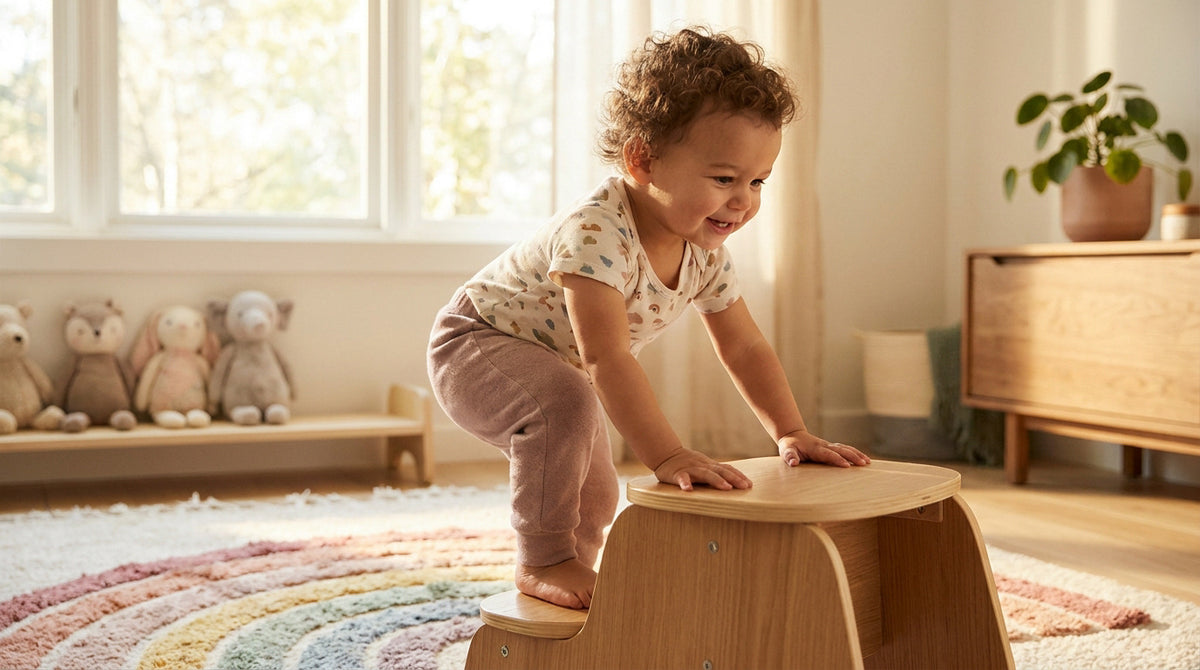
Stack two firm cushions next to a single one: a low step, then a higher one. Your baby learns to climb up and, above all, to come down backwards, the most useful safety reflex for what comes next.
6. The first arch to climb
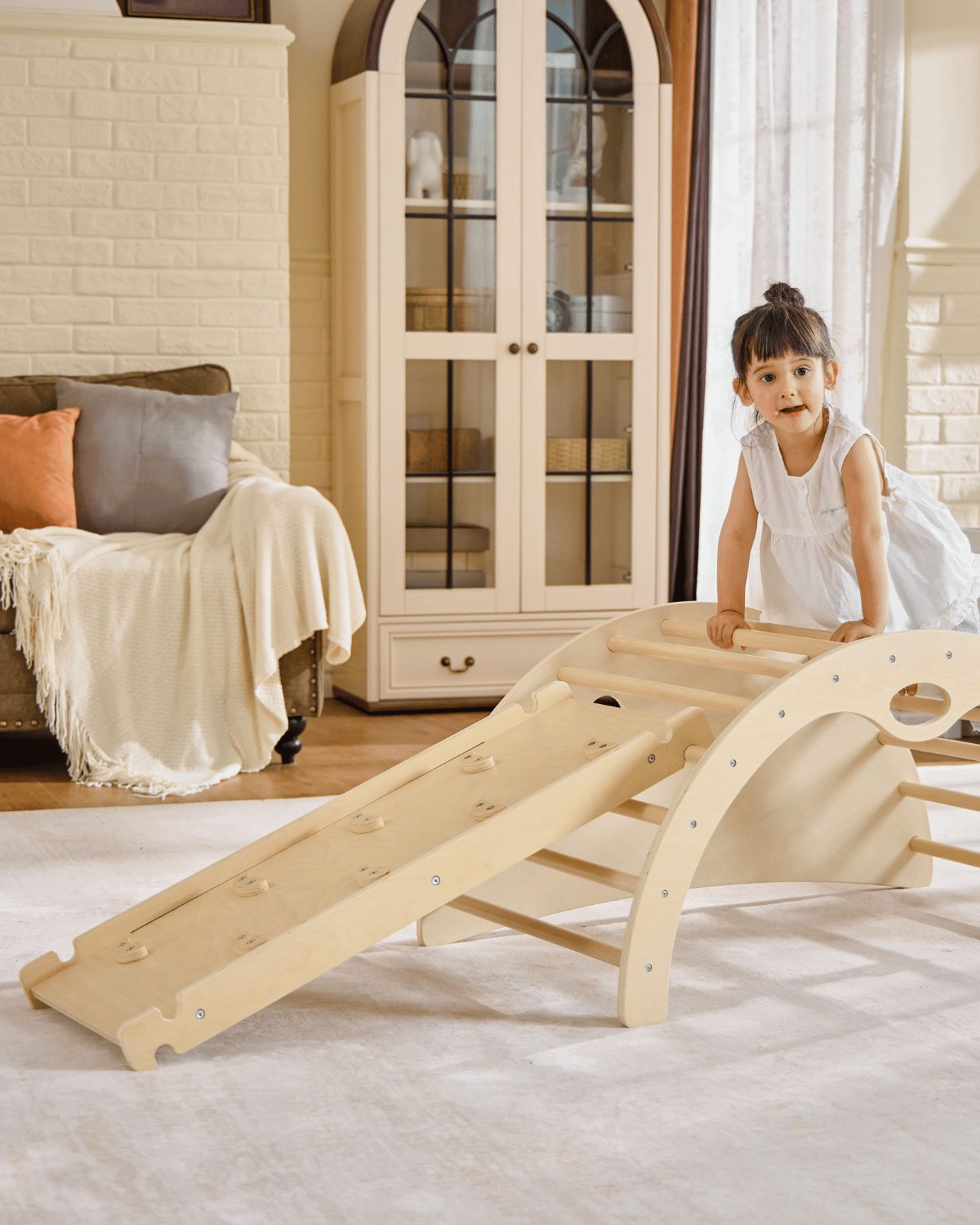
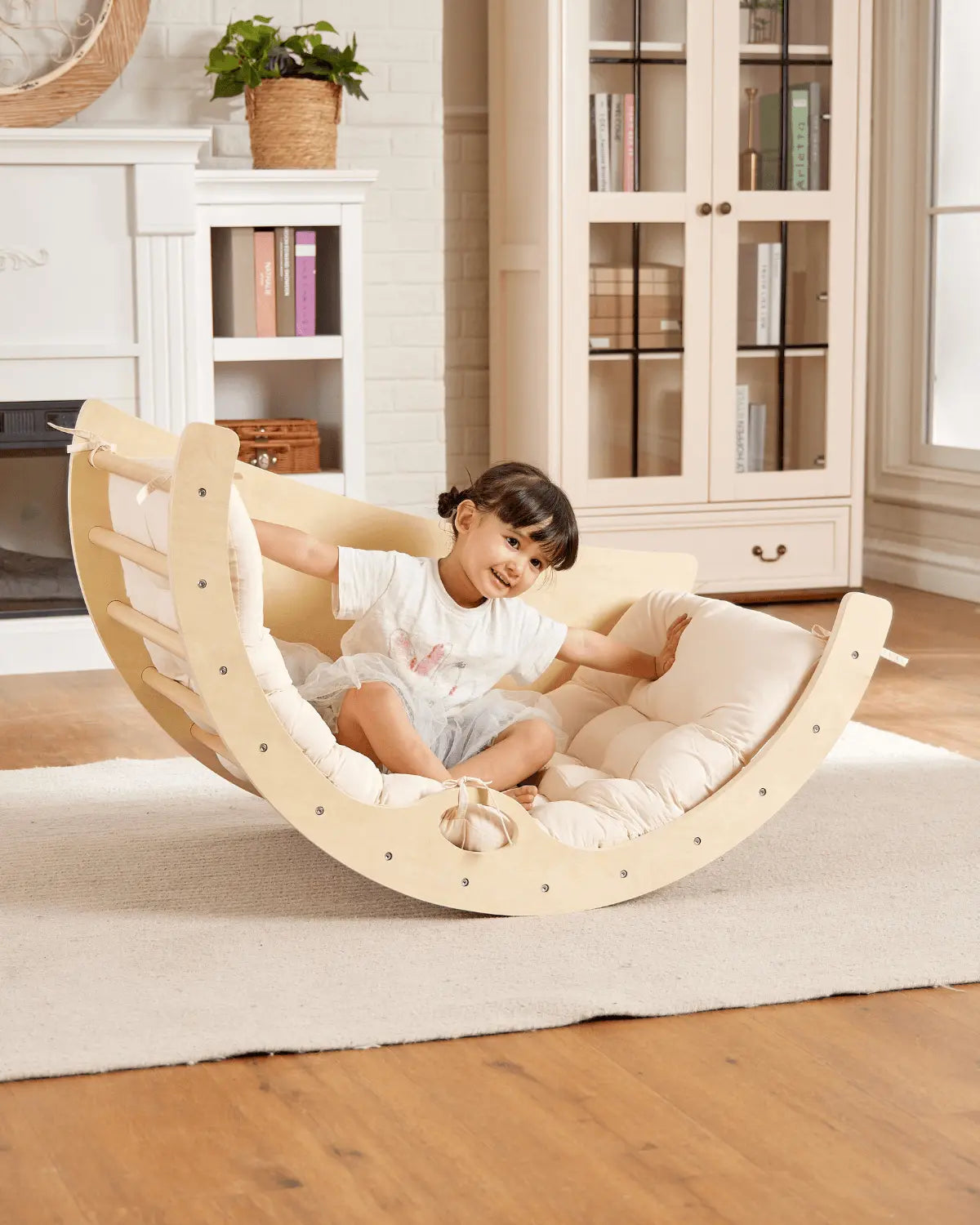
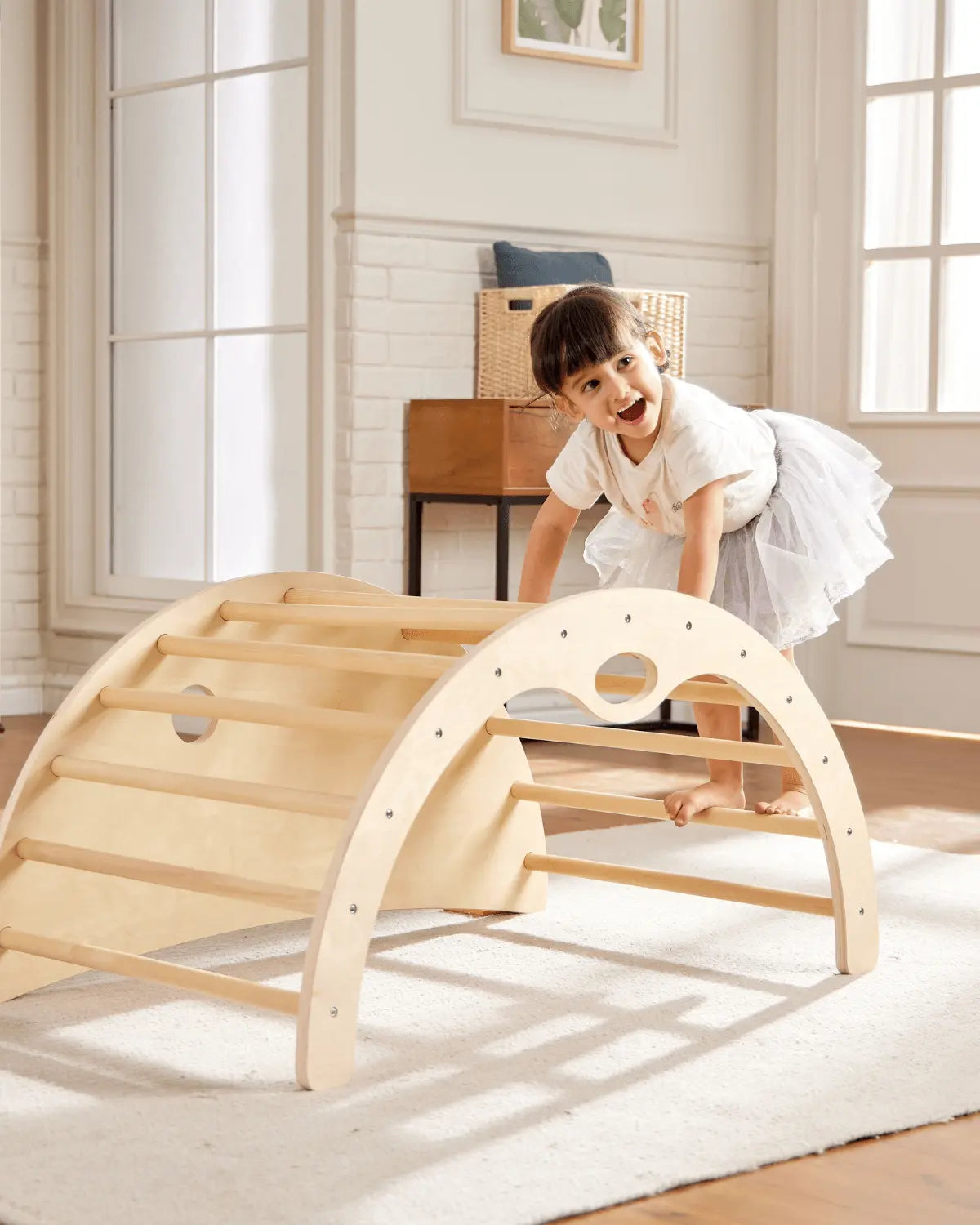
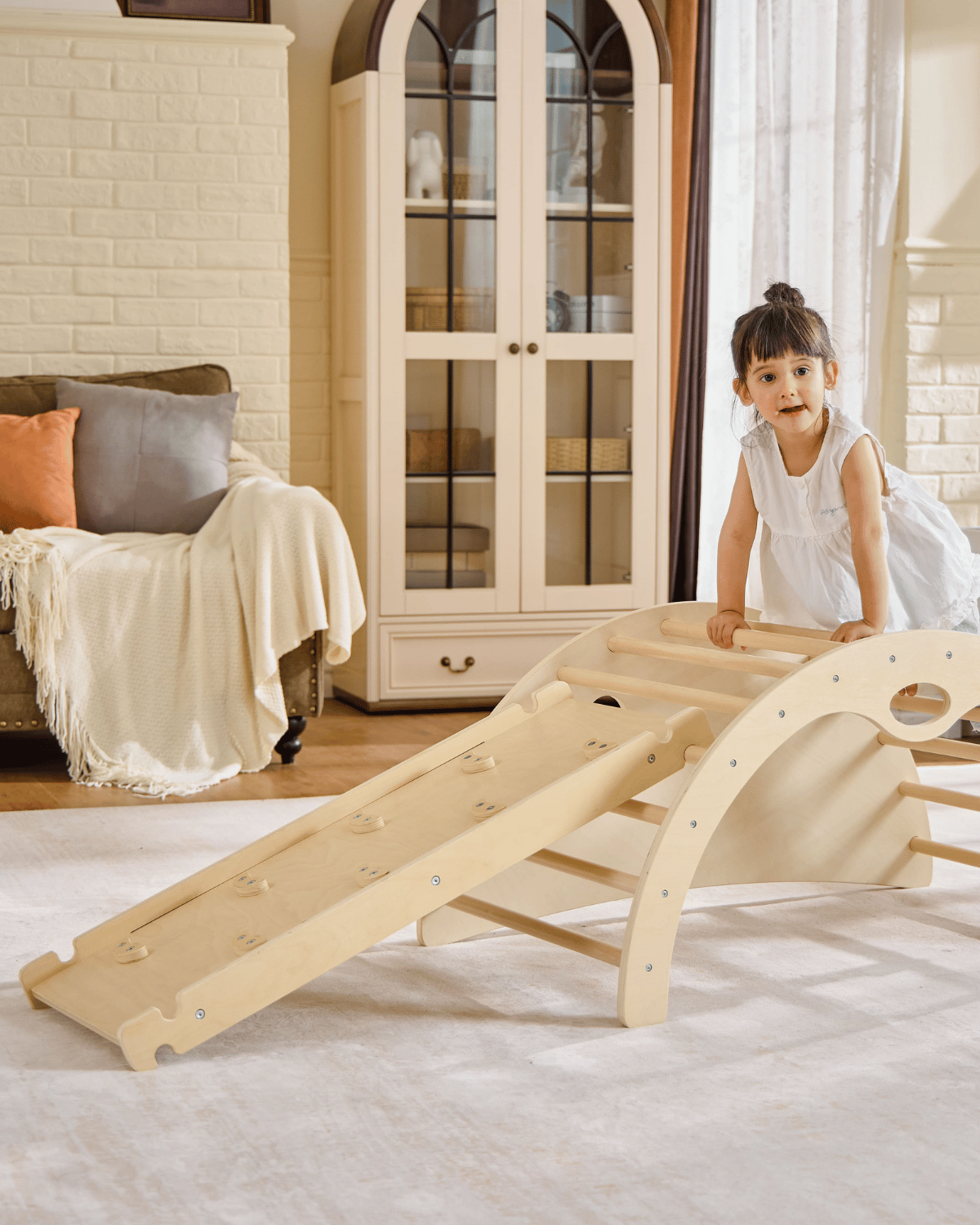
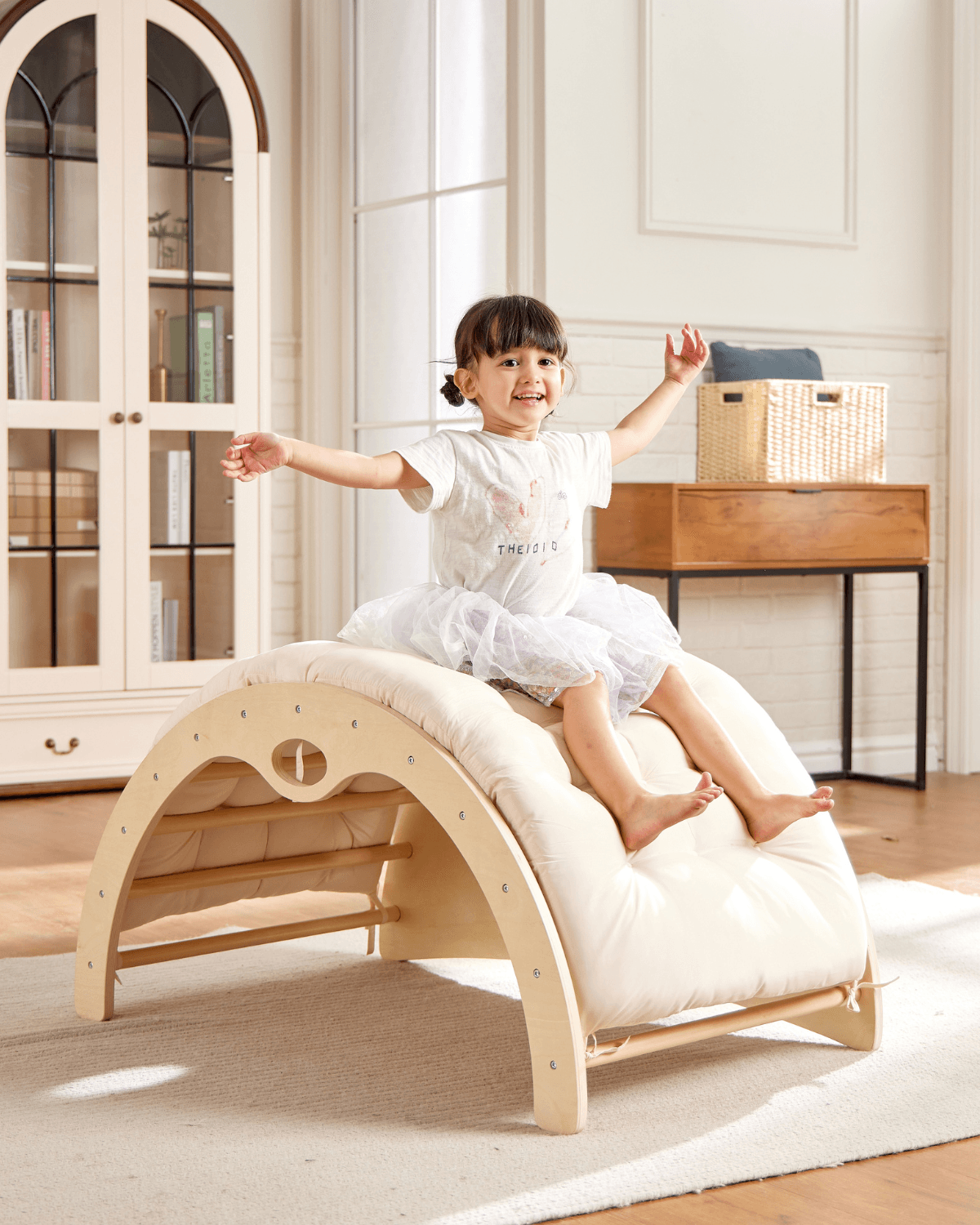
From 12 months, a wooden climbing arch becomes the centre of the course: your baby goes underneath, holds on, climbs the first rungs. Turned over, it becomes a rocker. Covered with a sheet, it becomes a den. A single structure therefore offers several obstacles. Our ideas for using the arch describe each position.
7. The texture path
A fleece blanket, a doormat, a bath mat, a flattened cardboard box: line them up and let your baby walk barefoot from one to the next. Each texture changes their footing and awakens their senses.
From 18 months to 3 years: sliding, jumping, balancing
8. Climb, then slide
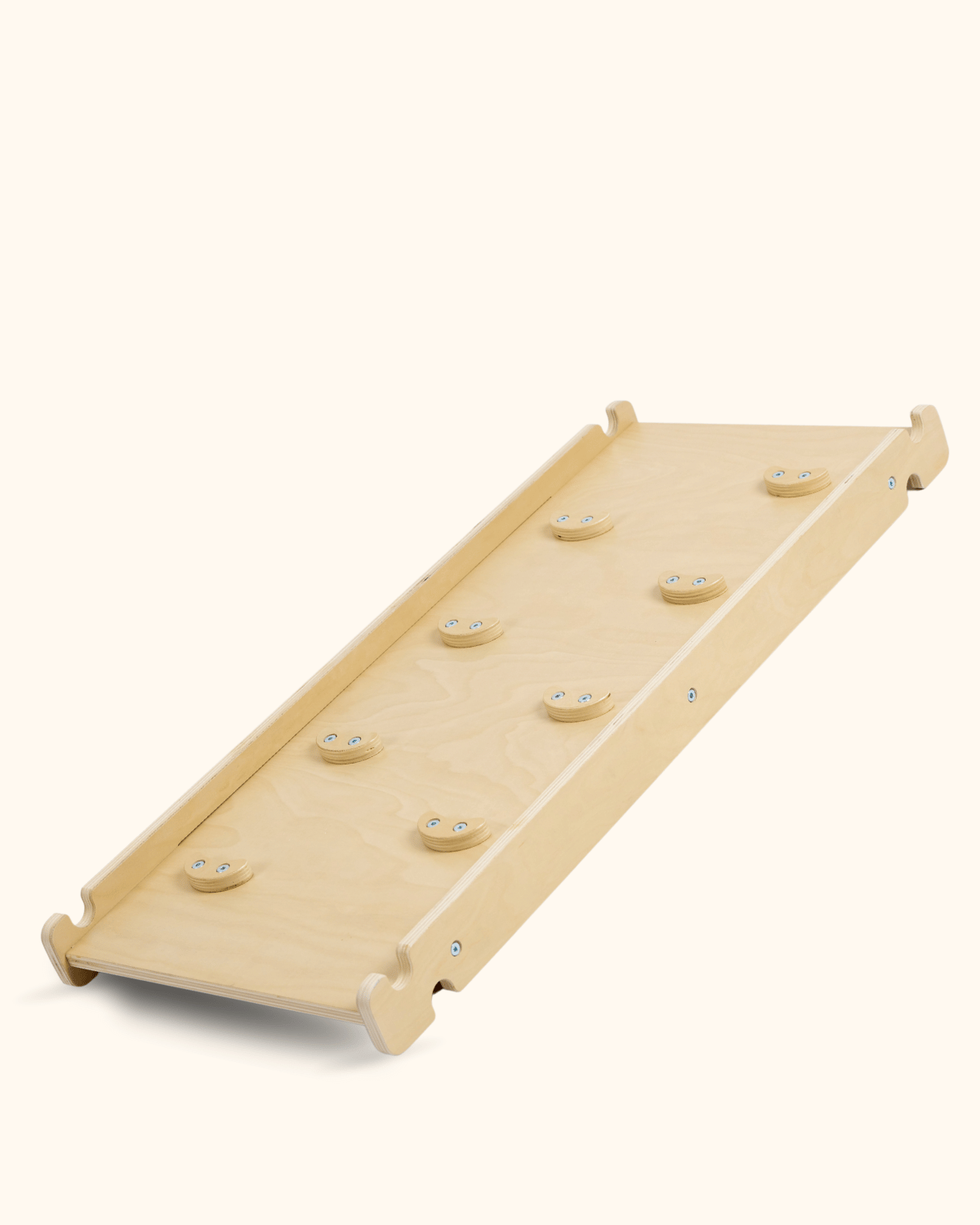
From 18 months, add a ramp to the arch: you climb up one side and slide down the other. Our reversible slide attaches to the Teedum arch and has a smooth side for sliding and a side with holds for climbing. It is often the obstacle children repeat dozens of times.
9. The floor beam
Painter's tape stuck to the floor, or a plank laid flat, is enough for a balance beam. Walking along it forwards, then backwards, then carrying an object: the difficulty increases with no risk of falling.
10. Jumping into hoops
Place three hoops or three cushions on the floor: jump with both feet from one to the next. Around two and a half, many children start to lift both feet at the same time. Before that, they "jump" one foot after the other, and that is perfectly fine.
An outdoor course
11. The garden or park course
A tree stump to step over, a low wall to walk along while holding hands, a grassy slope to climb up and down: nature offers varied, ever-changing obstacles. Uneven ground works on balance better than any mat.
12. The treasure hunt
For 2 to 3-year-olds, hide an object at the end of the course, indoors or outdoors, and announce the rule: go under, climb over, go around. The child follows a sequence, which works their memory as well as their body.
Which equipment: homemade, foam or wood?
No need to buy much. A good course usually mixes three types of equipment:
- Homemade: cushions, boxes, sheets, tape. Free and endlessly renewable, ideal for testing what your child enjoys.
- Foam modules: light and safe, perfect before 12 months. They are easy to move but older children soon tire of them, as they do not allow climbing high.
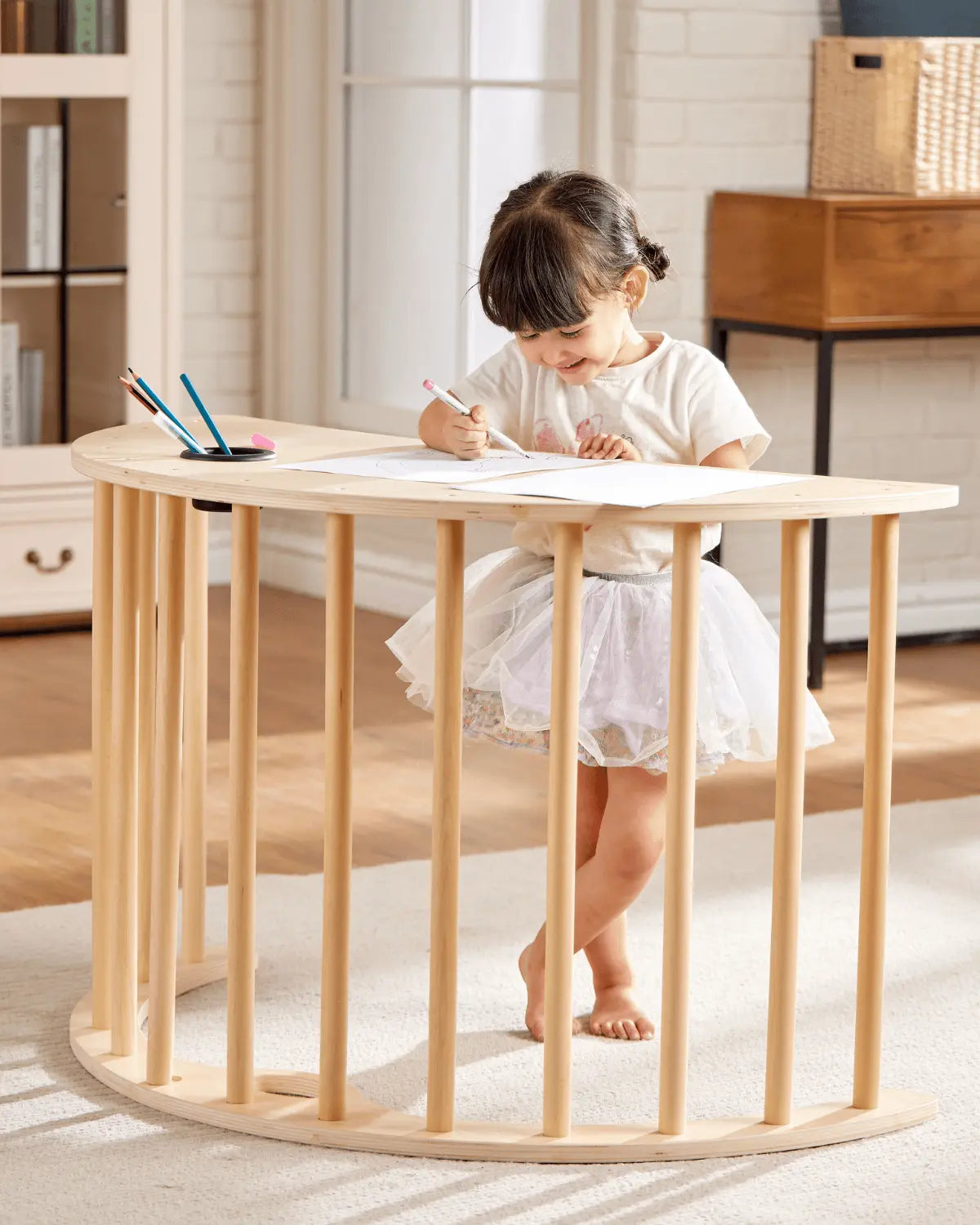
- Wooden structures: arch, triangle, ramp. More stable, they can be climbed and accompany the child up to age 6. A convertible arch also works as a rocker, a den or a desk when the course is put away.
The Pikler triangle is another classic structure for motor skills courses: our guide explains its origins and benefits.
Safety rules
- An adult present, always, without necessarily stepping in: observing is usually enough.
- A cushioned floor under the structures: thick rug or floor mattress.
- Bare feet rather than socks, so they do not slip and feel their footing better.
- No placing: do not put your baby at the top of an obstacle they have not reached on their own. If they climbed up alone, they will usually know how to get down.
- Stable, certified equipment: check the EN71 standard of toys and structures, the tightness of screws and the attachment of accessories before each session.
- The stated age: a climbing structure designed from 12 or 18 months should not be offered earlier.
Is your child already climbing everywhere? Our tips to make your home safe without forbidding everything.
Changing the course over time
Change the order or a single obstacle each week: your child rediscovers the course without having to relearn everything. Let them change it too, move a cushion, invent a passage. A course that stays set up all the time ends up being ignored: it is better to bring it out once or twice a day, then put it away.
A successful motor skills course needs very little: obstacles suited to the child, a safe floor and an adult who observes. Start with what you have at home, then add a stable structure when your child wants to climb higher.
FAQ
At what age can you start a motor skills course?
As soon as your baby moves around, at about 6 to 8 months, with very low obstacles: cushions, a sheet tunnel. Climbing structures come later, at the age stated by the manufacturer: 12 months for an arch, 18 months for a ramp or slide.
What should a baby motor skills course include?
Four types of obstacle are enough: something to go under (tunnel), something to climb over (cushion, step), a slope to go up and down, and a balance path (floor beam, textures). Then vary the heights as your child grows.
Foam or wooden course?
Foam works well before 12 months. Wood takes over when the child wants to climb higher: more stable, it can be climbed and lasts for several years. Many families combine the two.
How long per day?
Let your child decide: ten intense minutes or half an hour of back and forth. What matters is offering the course regularly and stopping when their attention drops.

Written by Charles CAIGNOL






Leave a comment
This site is protected by hCaptcha and the hCaptcha Privacy Policy and Terms of Service apply.