
Pikler triangle or climbing arch: which one should you choose?
The Pikler triangle and the climbing arch are the two main wooden climbing structures for toddlers. Both come from the same idea, free movement: letting children climb, go underneath and come back down at their own pace. But they are not used the same way day to day. Here are their differences, point by point, to help you choose the one that suits your child and your home.
- The Pikler triangle in brief
- The climbing arch in brief
- Point-by-point comparison
- Which one to choose for your situation?
- Can you combine the two?
- Safety: what to check
The Pikler triangle in brief
The Pikler triangle is named after Emmi Pikler, a Hungarian paediatrician who showed the value of letting babies discover movement by themselves. It is an A-shaped frame made of rungs, which the child climbs up one side and down the other. Most models fold flat, and many accept a ramp for sliding or climbing. To learn all about its origins and benefits, read our complete guide to the Pikler triangle.
The climbing arch in brief
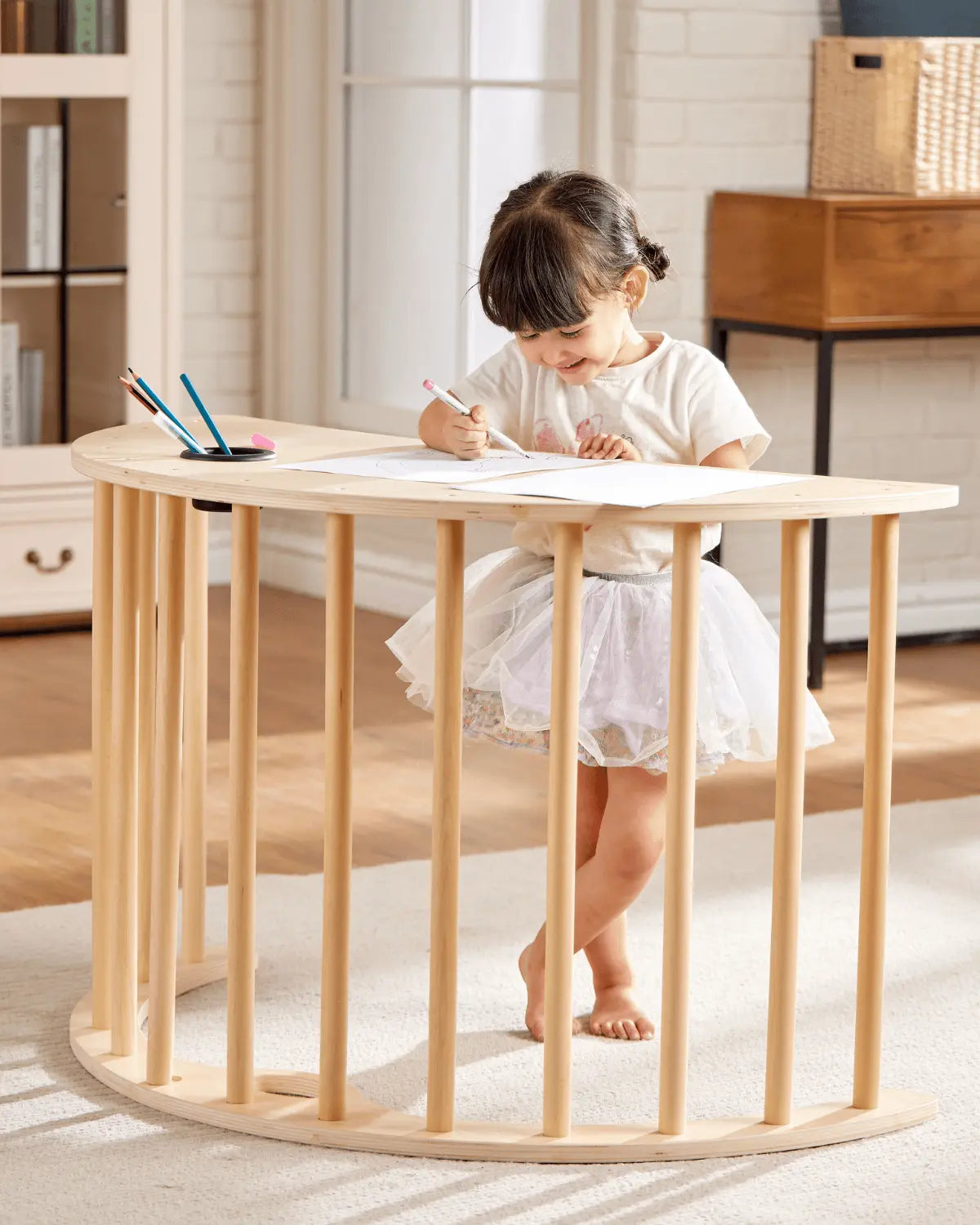
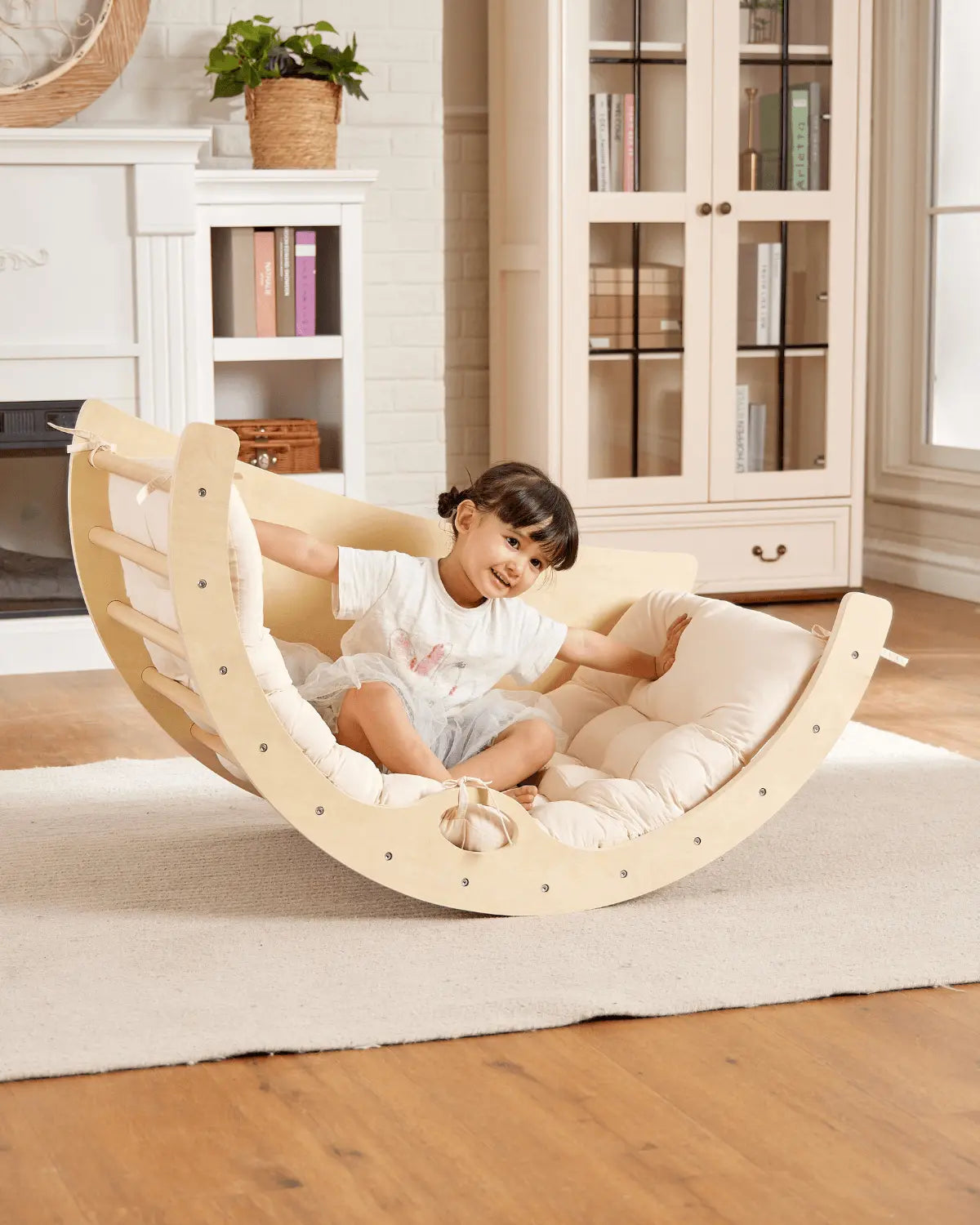
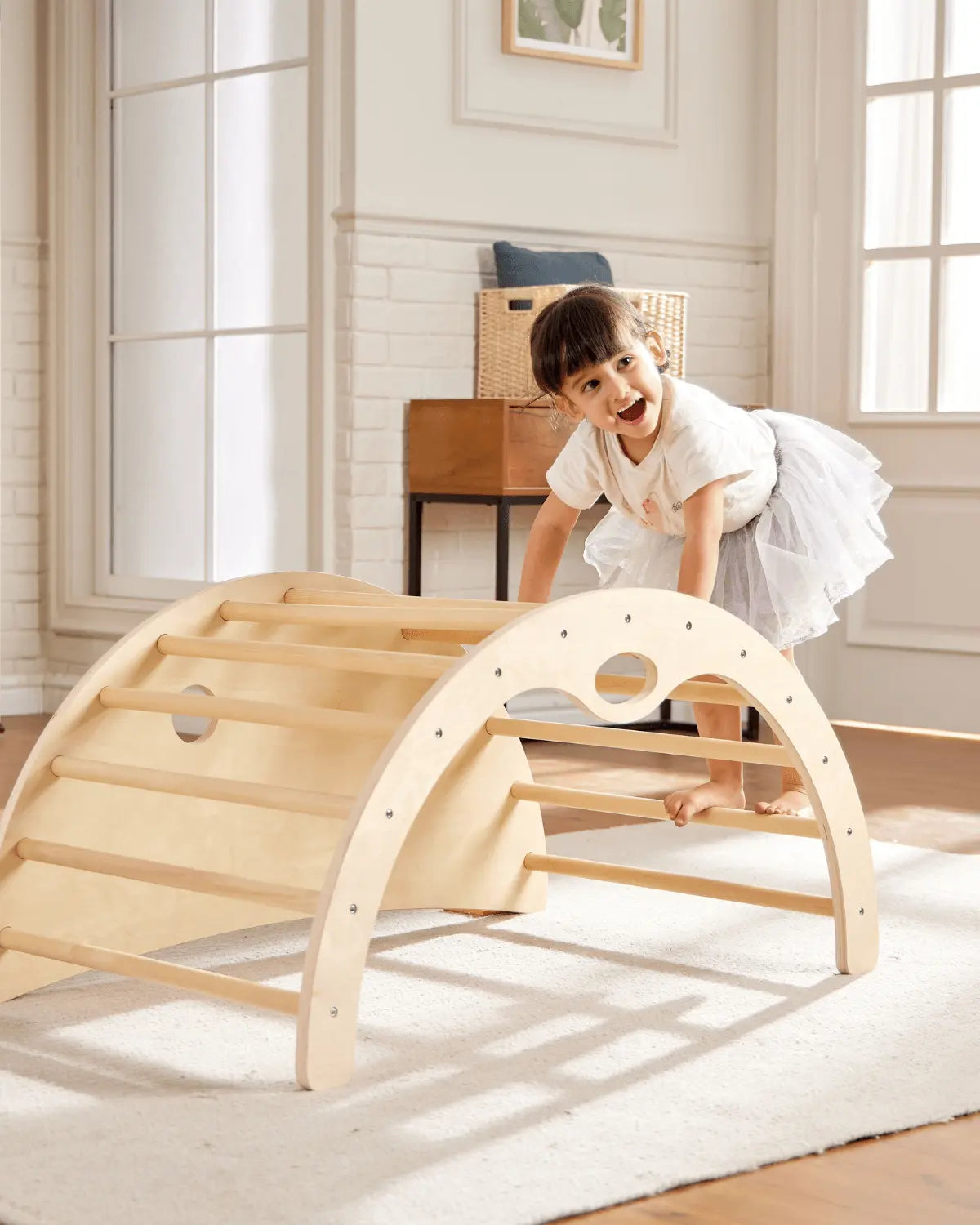
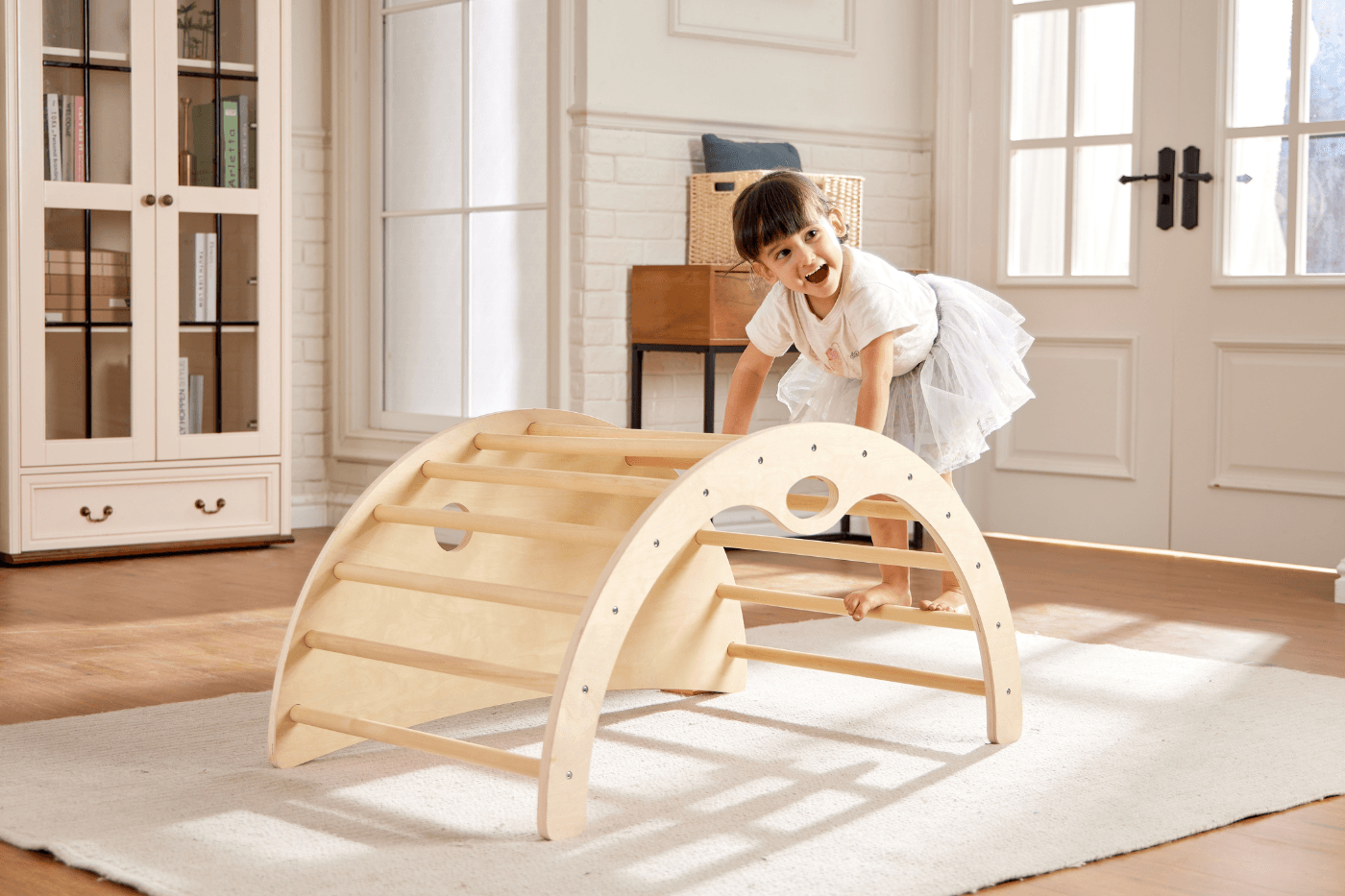
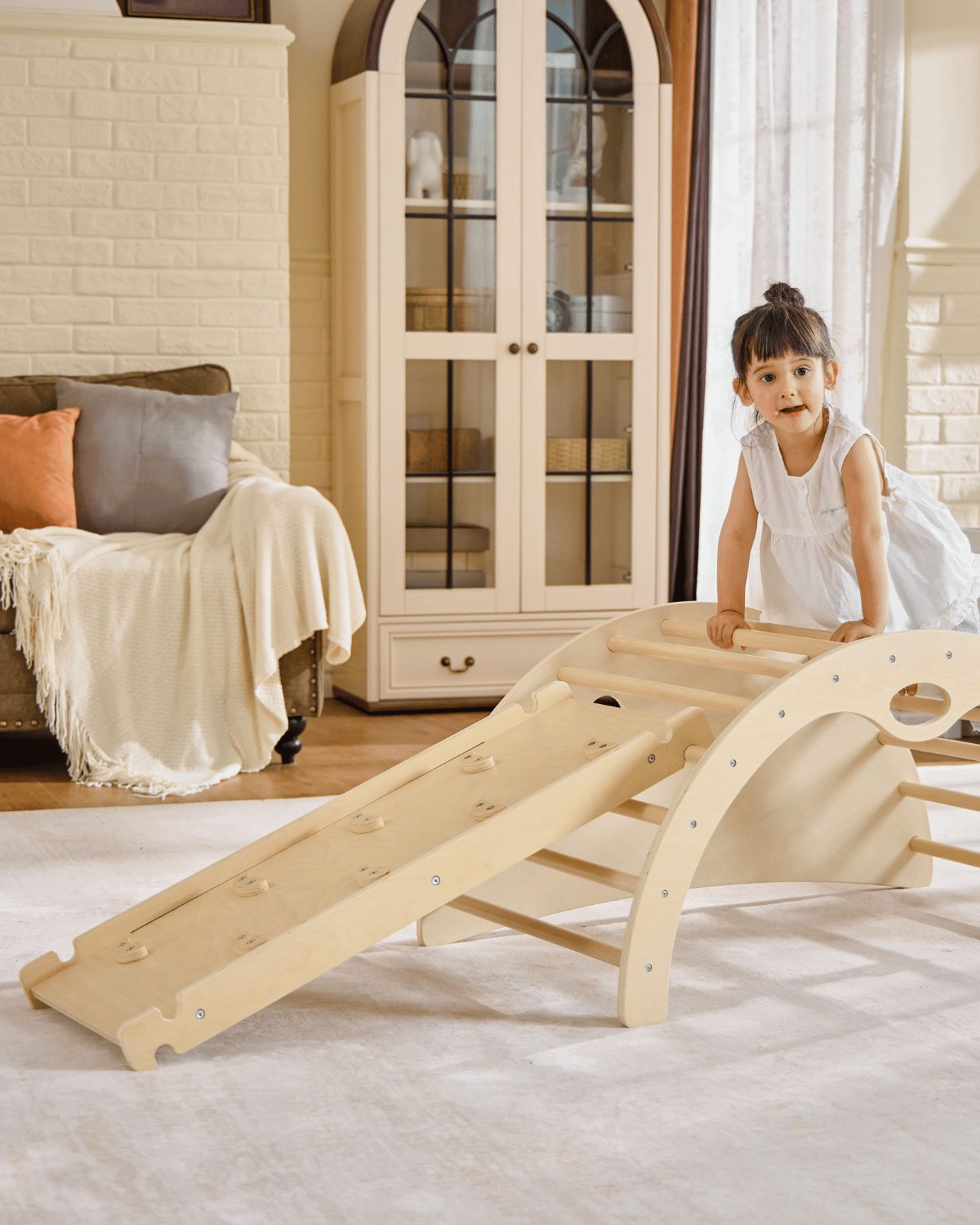
The climbing arch, often called a Montessori arch, is a curved structure with rungs. Standing on its feet, it forms an arch to climb and a tunnel to crawl through. Turned over, it becomes a rocker. Some models go further: our wooden Montessori arch also turns into a den, a desk with a pencil pot and a swing seat with its cushion. It can be used from 12 months to 6 years, up to 50 kg.
To discover all its positions, see our ideas for using the climbing arch.
Point-by-point comparison
| Criterion | Pikler triangle | Climbing arch |
|---|---|---|
| Shape | A-shaped, straight sides | Curved, half-moon |
| Main uses | Climbing, going underneath, sliding with a ramp | Climbing, going underneath, rocking, playing den, and depending on the model sitting to draw or read |
| Storage | Often foldable, stores flat | Does not fold, but stays useful every day as a rocker, swing seat or desk |
| Movement | Fixed structure | Can rock once turned over, can be blocked with wedges if needed |
| Accessories | Slide or climbing ramp depending on the brand | Slide and climbing ramp, cushion, wedges depending on the brand |
| Age | According to the manufacturer, often around 1 year | According to the manufacturer: 12 months to 6 years for the Teedum arch |
In short: the triangle is a pure climbing structure, handy if you want to put it away after each session. The arch is a multi-purpose structure, designed to stay in the room and be used outside active play time too.
Which one to choose for your situation?
You are short of space
Two approaches compete. If you want to put everything away every evening, a foldable triangle slides behind a piece of furniture. If you prefer an object that stays out and does several jobs, the arch alone replaces a rocker, a den and a small desk. Our tips for setting up a small Montessori flat can help you decide.
Your child climbs everywhere
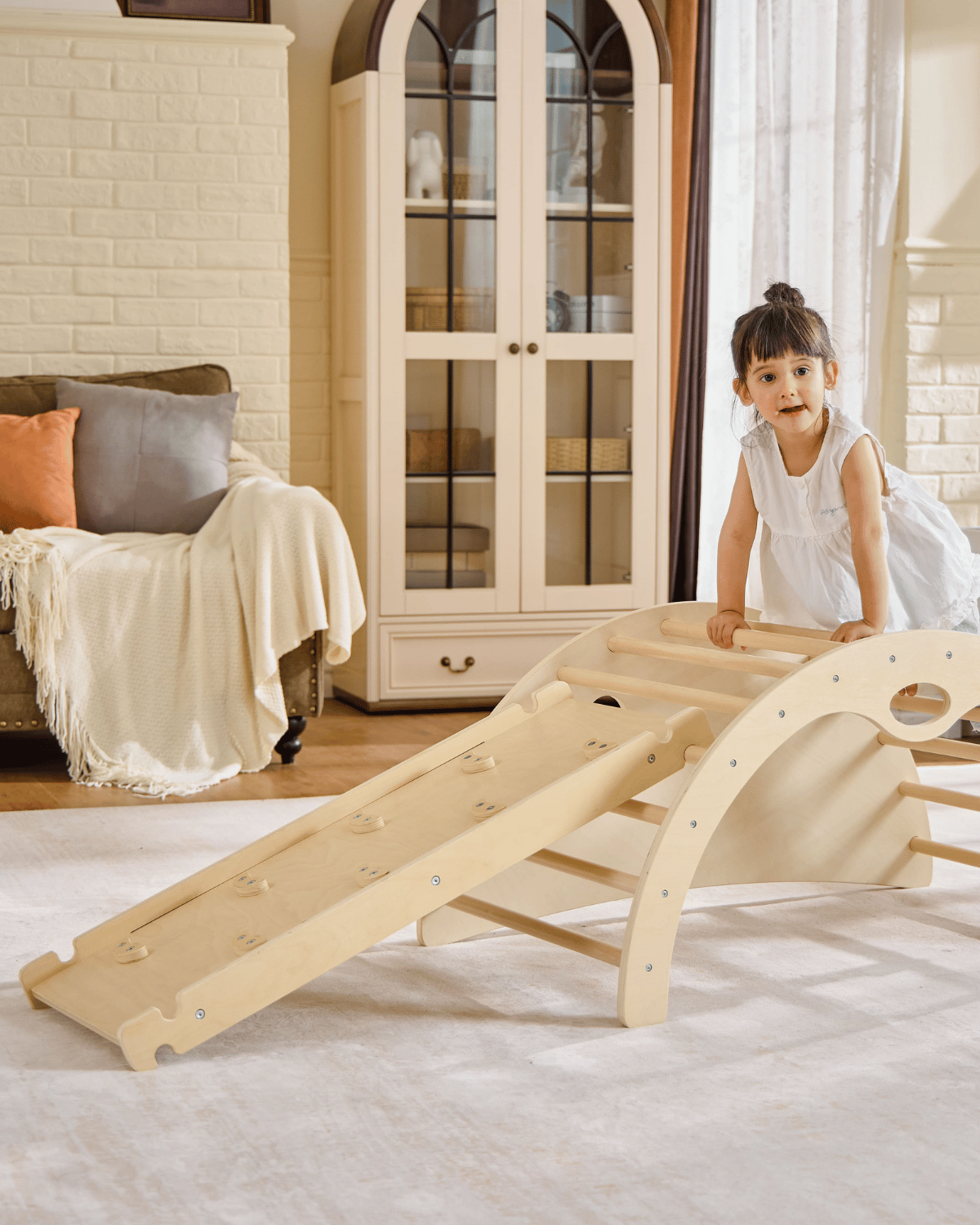
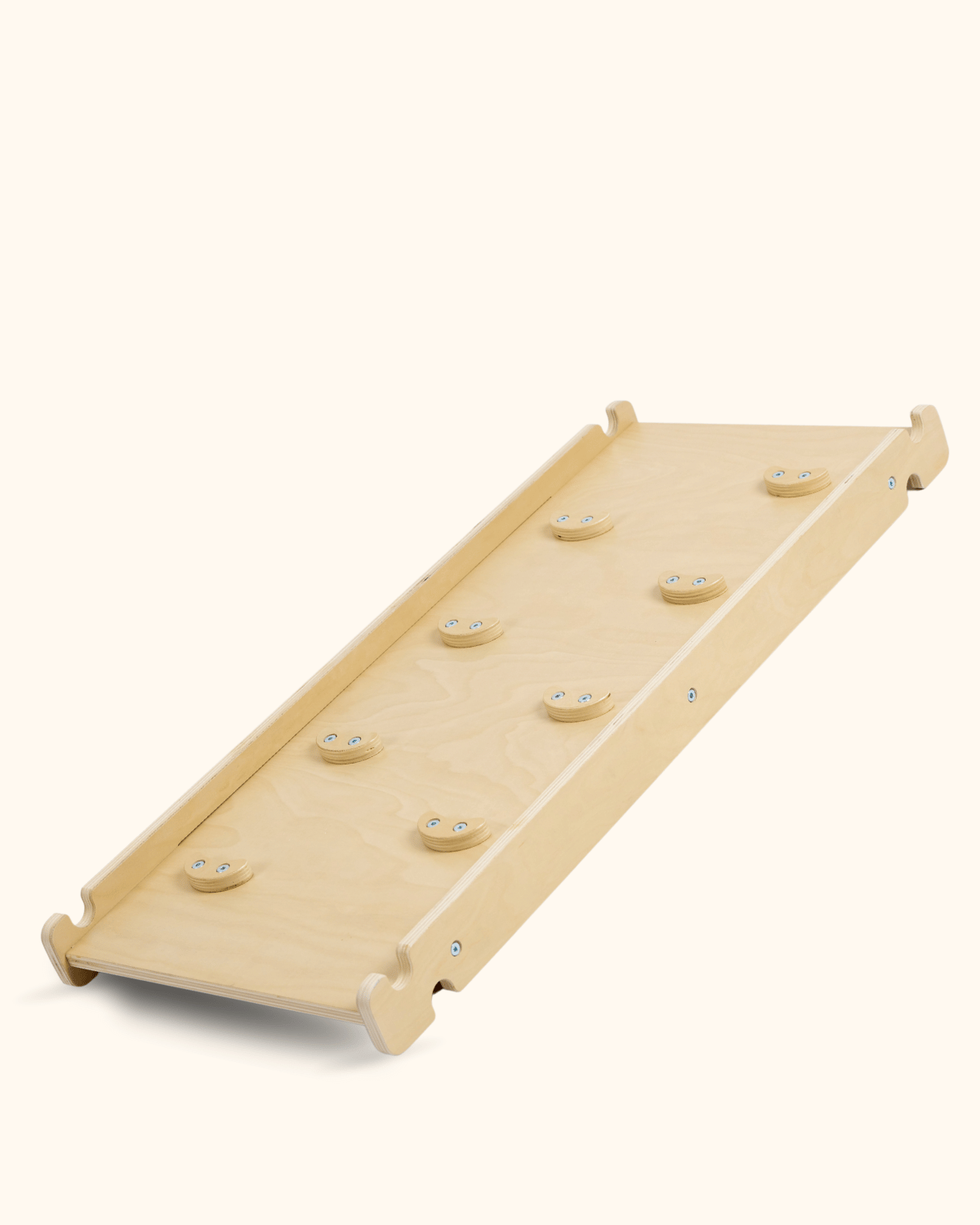
Both structures meet this need. The arch with a ramp offers a complete circuit: our reversible slide attaches to the Teedum arch from 18 months, with one side for sliding and one side with holds for climbing. To understand this need to climb, read why your child wants to climb everywhere.
Your child also enjoys quiet moments
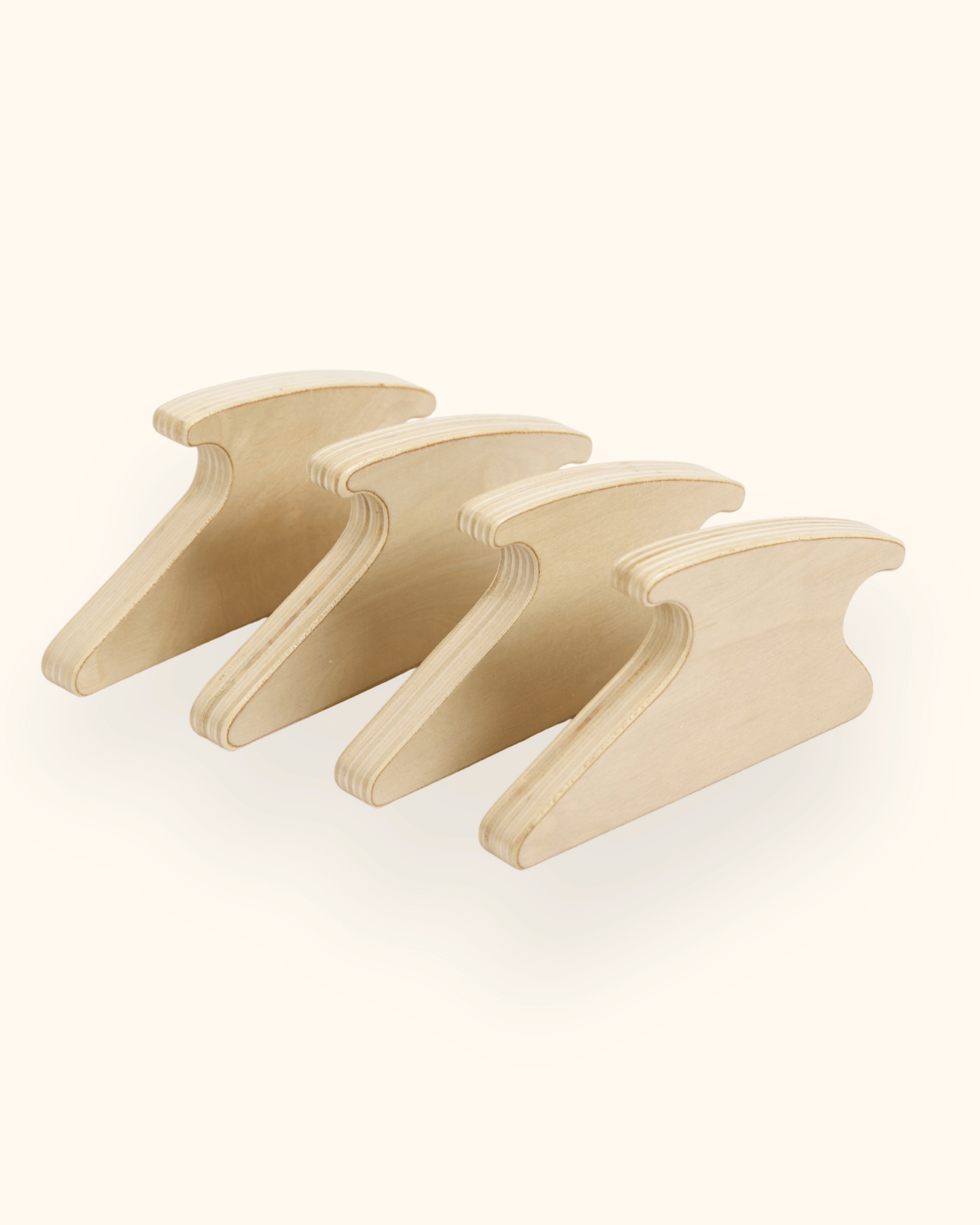
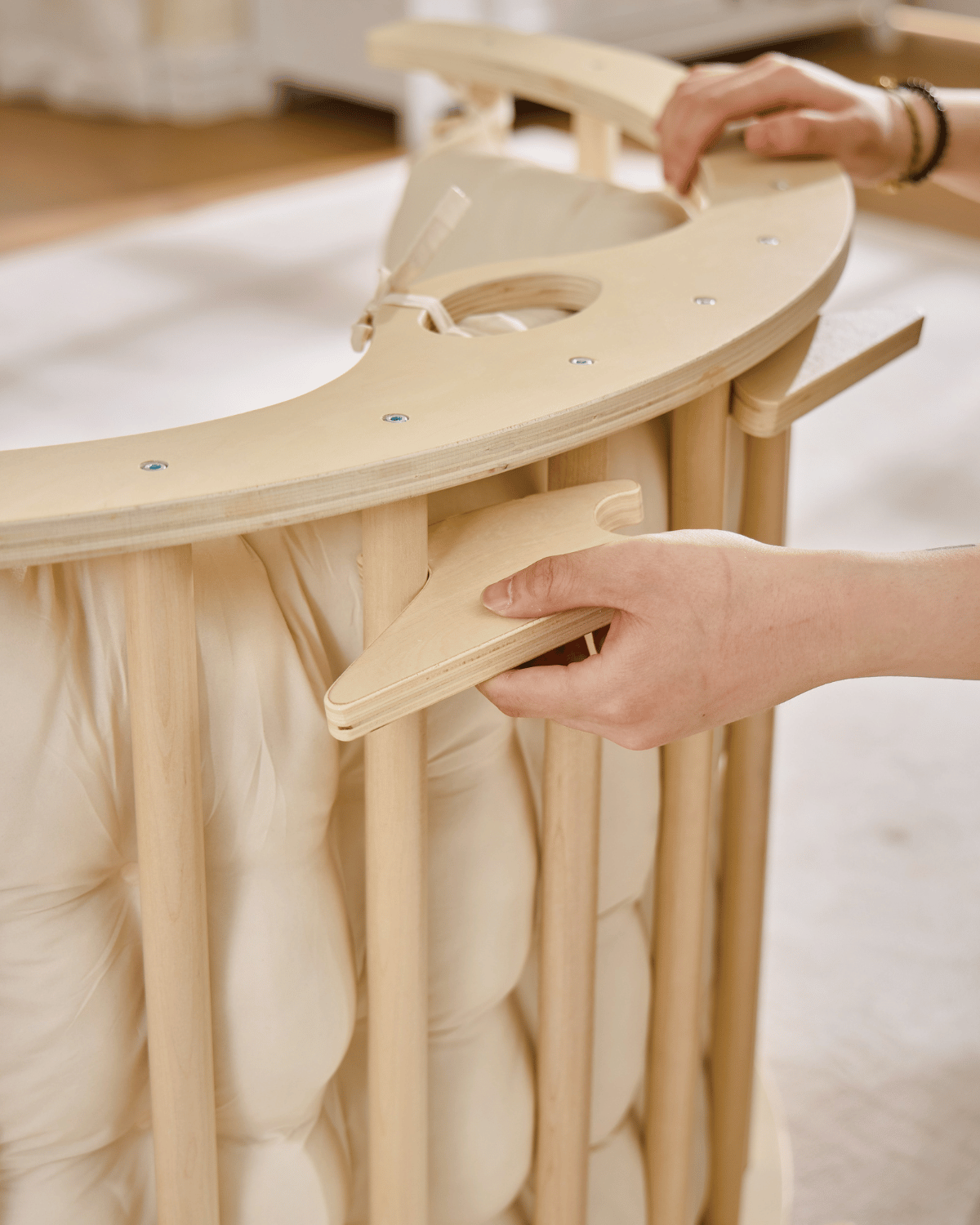
This is where the arch makes the difference: turned over with its cushion, it becomes a swing seat for reading or resting. With the arch wedges, the rocking movement is blocked and the arch becomes a stable quiet corner.
You want something that lasts
Look at the age and maximum weight stated by the manufacturer, and at the possible uses as your child grows. A structure that turns into a desk or a seat stays useful after the climbing years.
Can you combine the two?
Yes, and many courses are built that way: a triangle and an arch linked by a ramp form a circuit where the child climbs, goes underneath and slides. For more ideas, discover our 12 baby obstacle course ideas. Just check that the accessories are compatible: a ramp designed for one structure will not necessarily attach to another.
Safety: what to check
- The EN71 standard and CE marking, which guarantee mechanical and chemical testing.
- The stated age and maximum weight, to be respected.
- A cushioned floor around the structure: thick rug or floor mattress.
- Tight screws and secure accessories, to be checked regularly.
- An adult present during play, even without stepping in.
Triangle or arch, the best structure is the one your child will use every day. The triangle suits you if you want simple climbing that is easy to put away, the arch if you want a versatile object that stays at the heart of the room.
FAQ
At what age can a child use a Pikler triangle or an arch?
At the age stated by the manufacturer, usually when the child pulls up to standing and starts to climb, often around 1 year. The Teedum arch can be used from 12 months to 6 years, and its slide and climbing ramp from 18 months.
Triangle or arch for a 1-year-old?
Both are suitable if the manufacturer states that age. At 1 year, children often start by going underneath and climbing the first rungs. The arch also offers rocking, which they love to discover, always under supervision.
Can an arch be used like a Pikler triangle?
For climbing and going underneath, yes: the arch plays the same free climbing role. It does not fold like most triangles, but it offers uses the triangle does not have, such as rocking or the swing seat.
Do you need a ramp?
It is not essential, but a ramp doubles the possibilities: slide down one side, climb up the other. Choose one that is compatible with your structure and respect the stated age.

Written by Charles CAIGNOL








Leave a comment
This site is protected by hCaptcha and the hCaptcha Privacy Policy and Terms of Service apply.