
How to help your baby walk with free movement
The key takeaway: independent walking generally arrives between 10 and 18 months, and depends above all on the muscle strength built up on the floor. Bare feet at home and a clear environment help more than any accessory. The baby walker is not recommended; the walker wagon, on the other hand, lets the child stay in charge of their balance.
Most babies take their first steps between 10 and 18 months. This milestone depends far more on their muscle strength, built up on the floor over months, than on any accessory.
Yet we quickly worry as soon as the neighbour's child walks earlier, and sometimes invest in counterproductive equipment. Let's take stock of what really helps.
Respecting the child's natural pace
Walking does not begin on the day of the first step. It is prepared from the first rolls on the floor, well before pulling up to standing.
From crawling to standing
Baby starts by pivoting and crawling. These movements strengthen the deep muscles of the trunk, which will later stabilise their pelvis.
Then comes cross coordination: the alternating movement of arms and legs, the basis of the balance to come.
Finally, they pull themselves up by leaning on a piece of furniture. They use their own strength, and that is precisely what builds their muscle power. To go further, see our complete guide to free movement.
Why you should avoid holding their hands up in the air
Raising baby's hands shifts their centre of gravity forwards and distorts their perception of balance. They need to feel their own axis in order to progress.
This pulling also strains the shoulders and back, while these joints are still fragile. It is a very common reflex, and yet counterproductive.
Letting the child find their axis alone leads to more confident walking, because they learn to manage their footing.
Setting up a space that invites exploration
Creating stable supports
Identify your safest furniture: a firm sofa or a heavy coffee table offers reliable support for pulling up. Check that they cannot tip over, and fix any unstable furniture to the wall.
A fixed structure designed for this purpose, such as a climbing arch, offers rungs at the right height for pulling up and moving sideways. Note that it is intended from 18 months: before that age, the low furniture in the house does the job very well.
Place attractive objects at a reasonable distance to encourage sideways movement, that side-step which precedes free walking.
The floor and clear areas
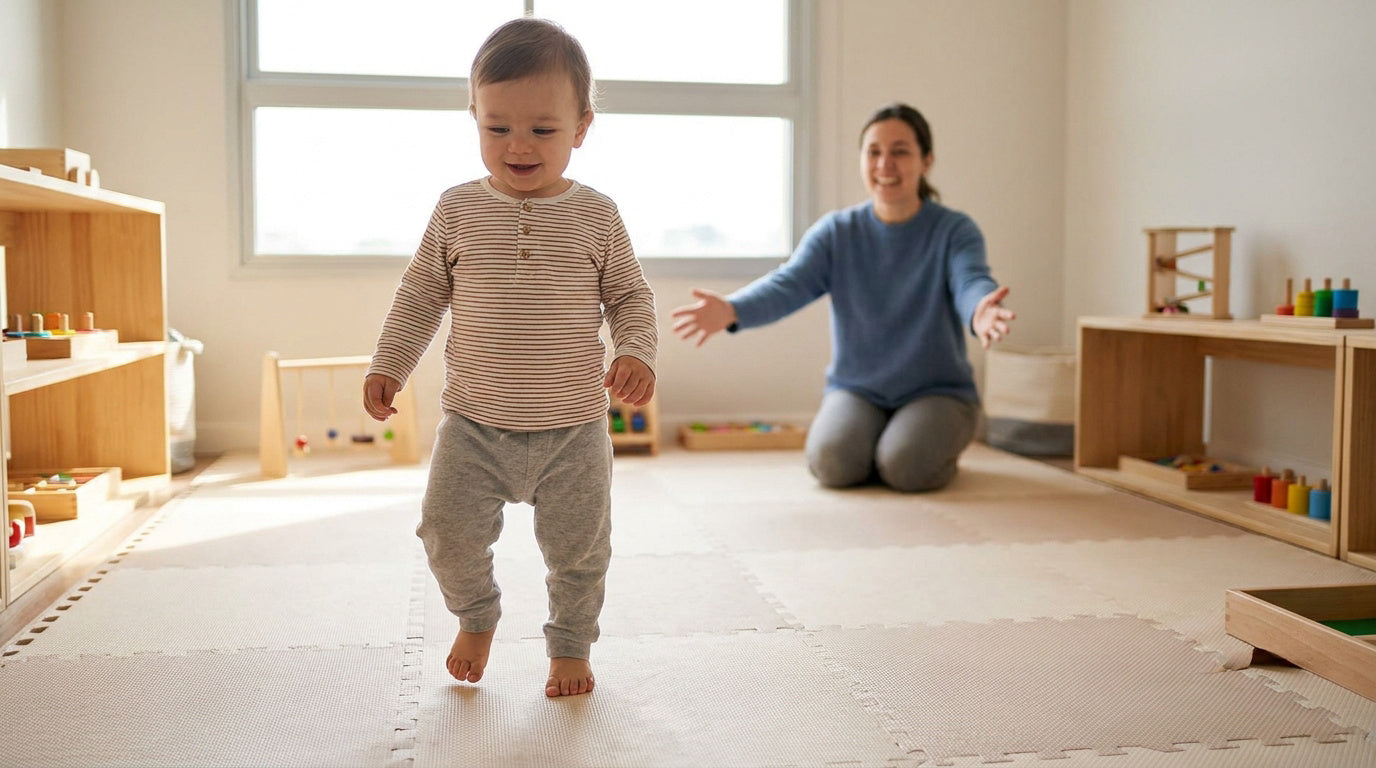
A firm rug gives the toes good grip. Avoid surfaces that are too soft, which are destabilising, and slippery wooden floors.
Clear the walkways, protect sharp corners, remove hanging tablecloths and cables on the floor. These precautions reduce risks without removing freedom of movement.
Why the baby walker is not recommended
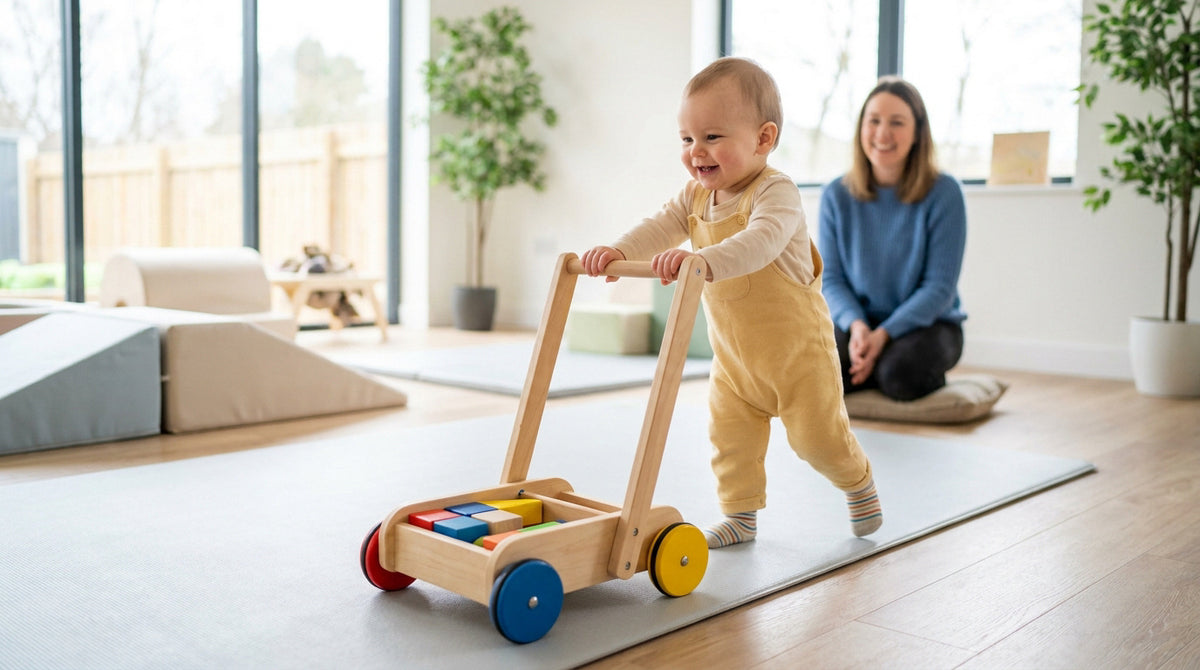
Be careful not to confuse two very different objects: the baby walker (the child sits in a seat on wheels) and the walker wagon (the child stands and pushes).
The risk of accidents
The baby walker lets the child reach a speed they cannot control, with a risk of falling, especially on stairs. It also gives access to unusual heights: pans, cleaning products, objects normally out of reach.
Most nurseries exclude it, and its sale has been banned in Canada since 2004. In France, health authorities and early childhood professionals advise against using it.
The impact on motor development
Held in a seat, the child does not properly perceive their footing and does not develop protective reflexes, such as putting their hands out in front.
They also tend to push on tiptoe, which is not the expected posture for balanced walking.
The walker wagon, an acceptable alternative
The wagon is pushed while standing: the child stays in control of their balance, controls their speed, and stops or lets go of the support when they decide.
Choose a model weighted enough not to shoot forward at the first push. Useful, but not essential: a child learns to walk very well without one.
The importance of bare feet
Strengthening the arch of the foot
Feet are rich in nerve endings that inform the brain about the nature of the floor. This is how the child builds their body map.
Barefoot, the toes grip and spread, which strengthens the arch of the foot and improves weight distribution.
Save shoes for outings. At home, bare feet or non-slip socks.
Clothes that don't get in the way
Prefer soft, stretchy fabrics: the child must be able to bend their knees without resistance. Stiff or overly long trousers cause trips and discourage attempts.
Handling falls without stress
Late walking or real delay?
Every child follows their own calendar: some walk at 10 months, others at 18, and this says nothing about what comes next.
Do consult, however, if your child cannot sit up, seems very tense or on the contrary very floppy, or if they make no progress at all over several months. The paediatrician will assess overall muscle tone.
And let's remember: early motor skills say nothing about future development.
Reacting to the first tumbles
Stay calm: your reaction guides theirs. If you panic, they will conclude that falling is serious.
Let them get up alone after a light fall. Every fall is information that helps them adjust their footing.
To help your baby walk, the essentials come down to a few things: time on the floor, bare feet, a clear space and stable supports. For what comes next, our article on the stages of walking from 6 to 18 months details each phase.
FAQ
At what age will my child take their first steps?
Generally between 10 and 18 months, with wide normal variations. Some set off from 9 months, others perfect their crawling until 17 months. What counts is overall progress and the curiosity to explore, not the date.
Does the baby walker help with walking?
No, and it is not recommended. It places the child in a position that does not match real walking, encourages pushing on tiptoe and prevents the development of protective reflexes. It also presents accident risks, especially on stairs.
Why leave baby barefoot at home?
The nerve endings in the foot inform the brain about the floor, and the toes grip freely, which strengthens the arch of the foot. Rigid shoes limit ankle mobility. Keep them for outdoors.
How should I react when my child falls?
Stay calm and let them get up alone if the fall is light. Falling is part of learning: this is how the brain adjusts the next steps. Just make sure the space is safe, with a firm rug and protected corners.
Walker wagon or baby walker: what's the difference?
In the baby walker, the child is seated and carried by the device. With a wagon, they stand and push: they manage their weight, speed and direction, and can let go whenever they want. Choose a weighted model so it doesn't run off too fast.

Written by Charles CAIGNOL






Leave a comment
This site is protected by hCaptcha and the hCaptcha Privacy Policy and Terms of Service apply.