
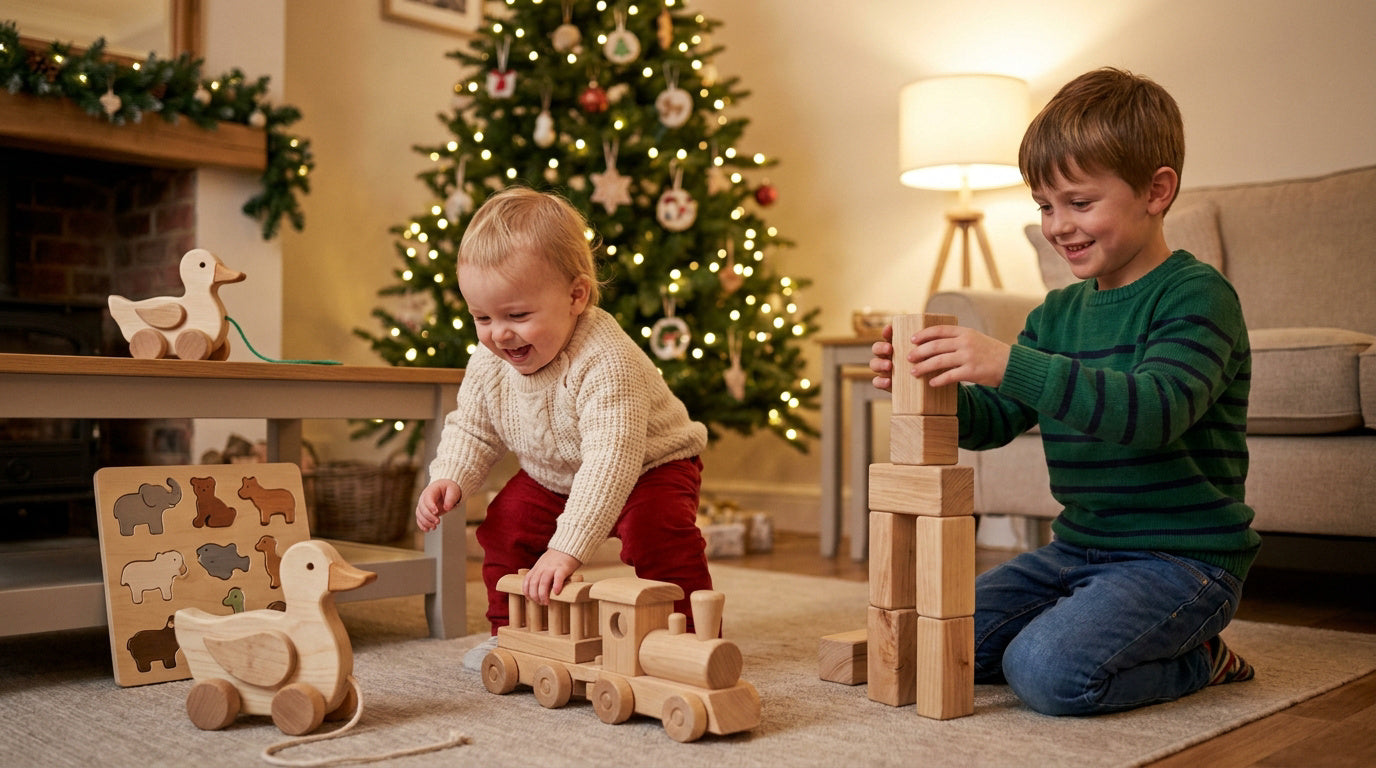
Finding the ideal sustainable Christmas gift for children aged 0 to 6
The key takeaway: at Christmas, a few well-chosen gifts are better than many objects forgotten by January. Favour wood and natural materials, check the CE marking and the EN 71-3 standard, and choose according to the child's real age. The 4-gift rule helps set boundaries for the family without spoiling the celebration.
Every January brings the same observation: some of the Christmas gifts are no longer used. Too noisy, too complicated, or simply not suited to the child's age.
A gift that lasts meets two conditions: it matches what the child can do now, and it stays interesting once they have grown. Here is a selection by age group, with what to check before buying.
Why aim for durable
A wooden toy takes knocks and can be repaired, where a low-end plastic model cracks and goes in the bin. Over three or four years, the real cost gap reverses.
Wood also provides richer sensory feedback: weight, texture, temperature. This information matters to a young child building their perception of the world.
Finally, a beautiful wooden object gets passed on. It carries the traces of play and goes to the little brother, the cousin, sometimes the next generation.
Recognising a safe toy without being a chemist
Useful labels
CE marking is the legal minimum: it commits the manufacturer to complying with European requirements. The EN 71-3 standard more precisely governs the migration of certain elements (heavy metals in particular) in materials, including paints and varnishes.
The FSC label (or PEFC) indicates that the wood comes from sustainably managed forests. It is an environmental criterion, not a health one: do not confuse the two.
For textiles, the GOTS label governs the organic production of fibres and limits the use of chemicals in processing.
Warning signs
A strong chemical smell when opening the box should alert you: synthetic varnishes can release volatile components. Prefer water-based finishes or vegetable oils.
Also beware of parts that come off, sharp edges and splinters. Before age 3, no small detachable part must be accessible.
No toy is completely harmless: standards reduce risks, they do not replace your supervision.
From 0 to 12 months: sensory discovery
At this age, the child explores with their mouth and hands. Aim for simple and sturdy.
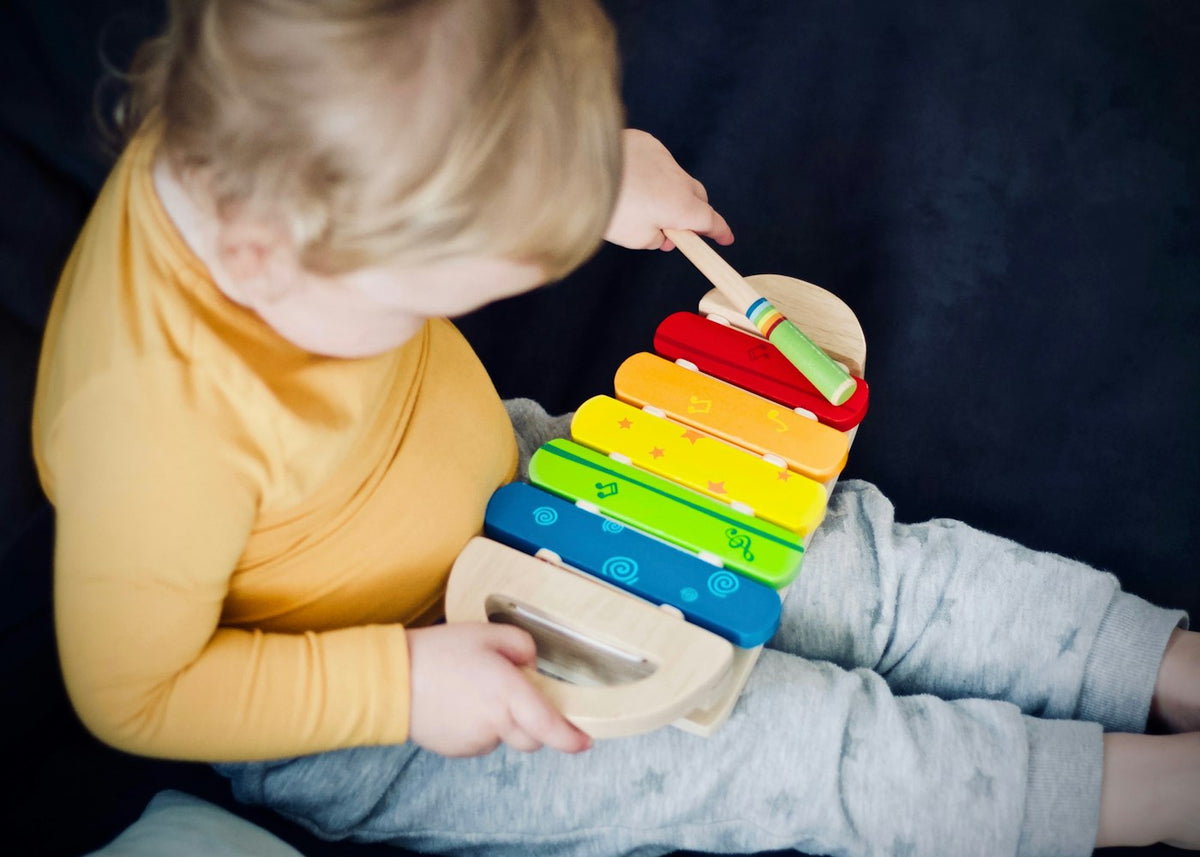
Wooden rattles and teething rings: pleasant weight, shapes that encourage grasping.
Thick board or fabric books: strong visual contrasts, bite-resistant and washable.
Sensory mats and baskets: gathering varied materials costs little and keeps them busy a lot.
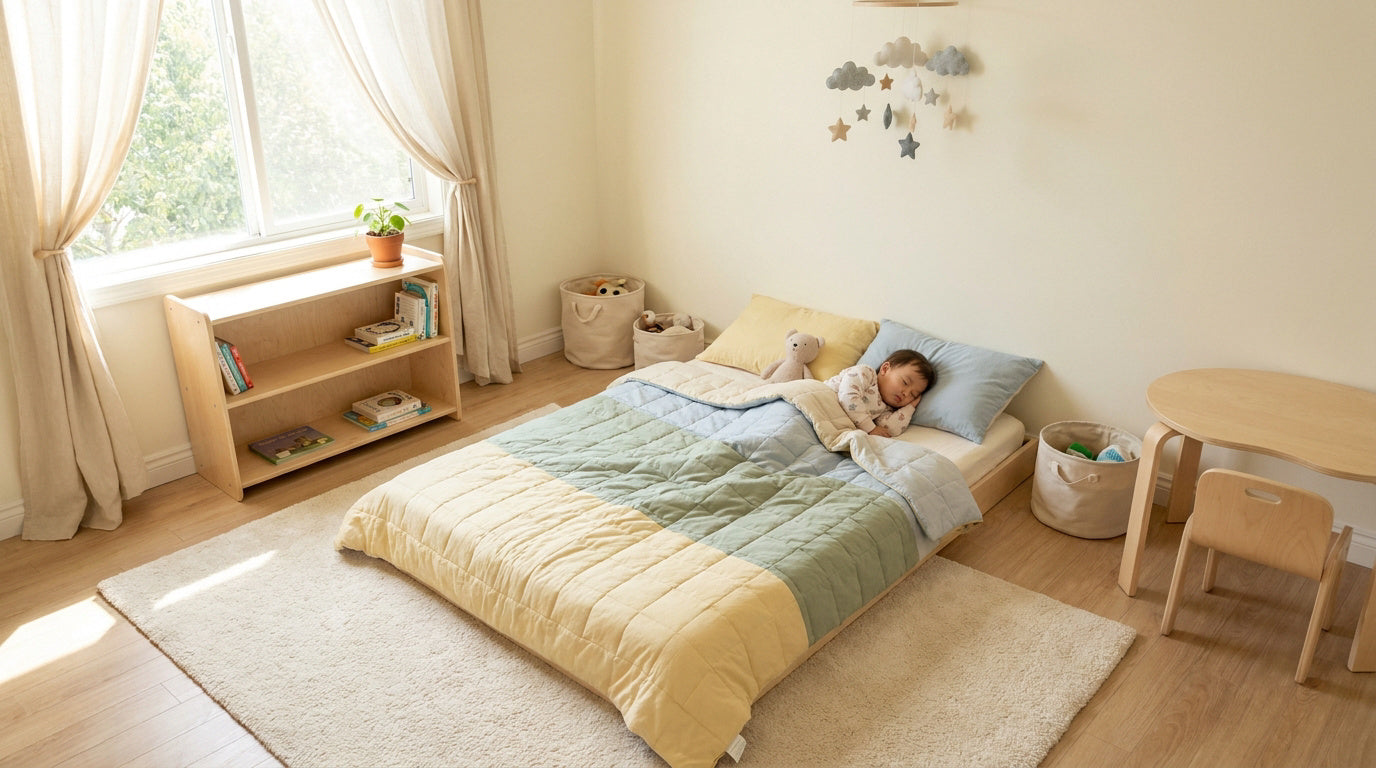
Above all, allow time on the floor, on a firm mat. That is where free movement is built, far more than in a bouncer.
From 1 to 3 years: moving and imitating
The child walks, climbs and wants to do what you do. Two needs to cover.
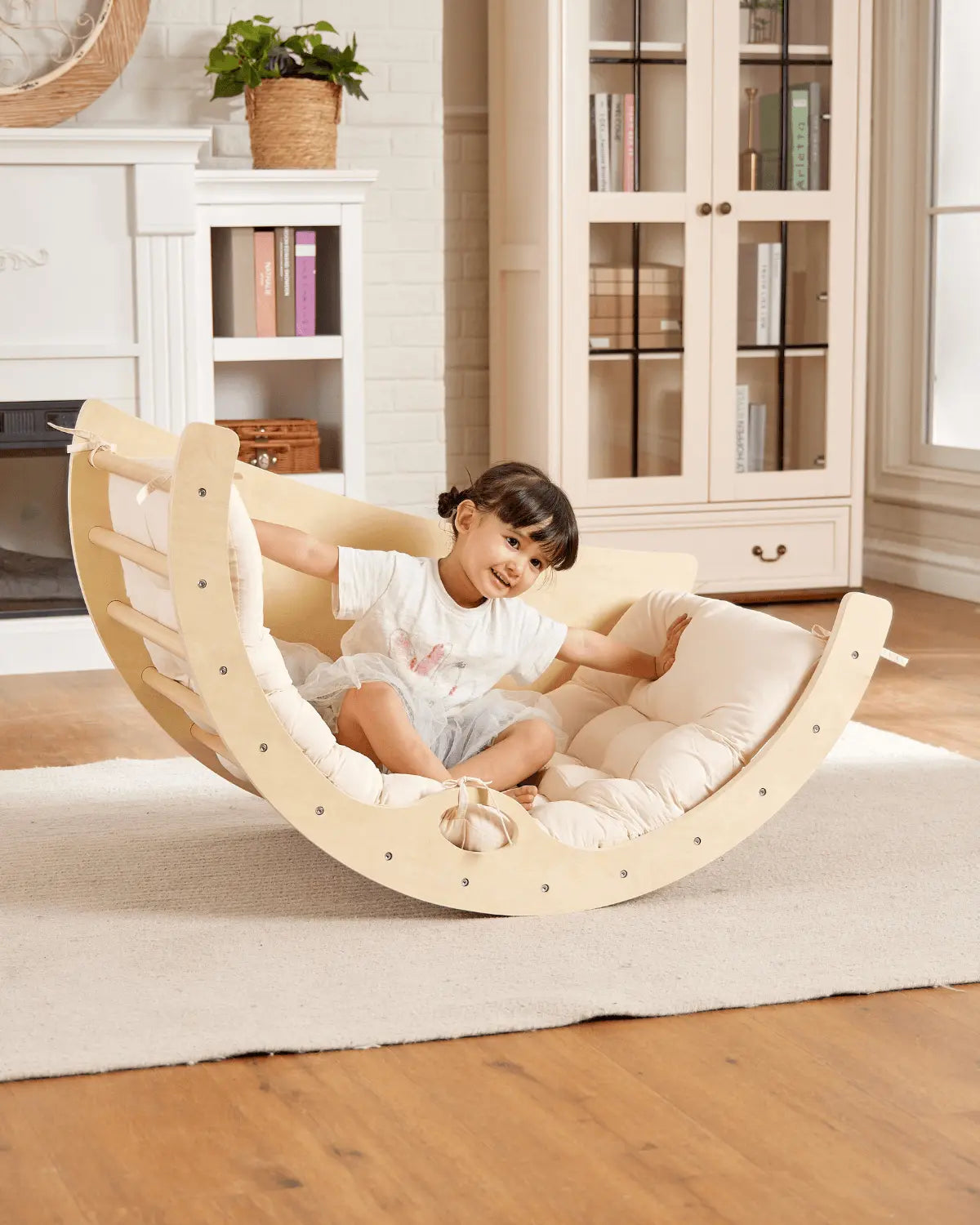
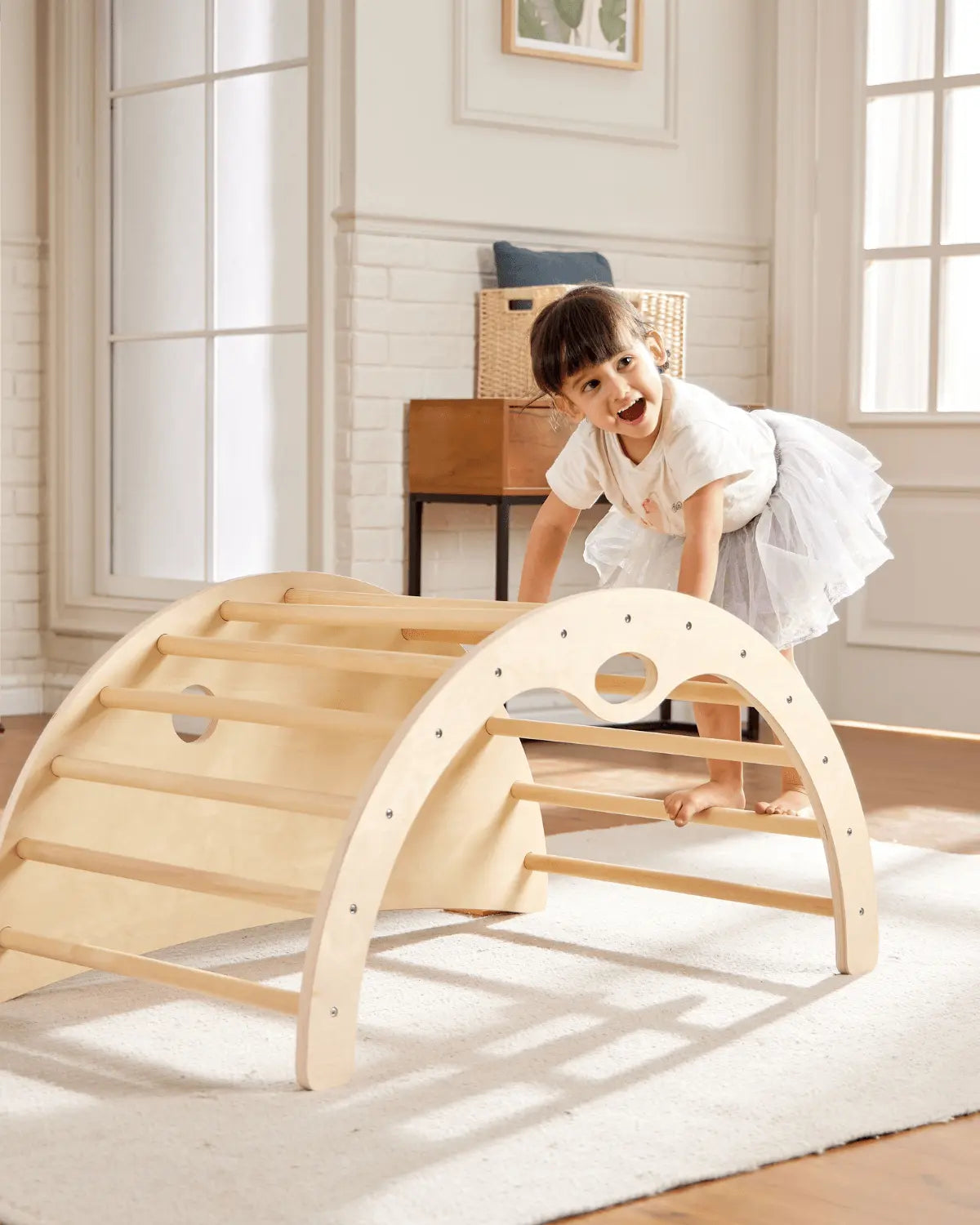
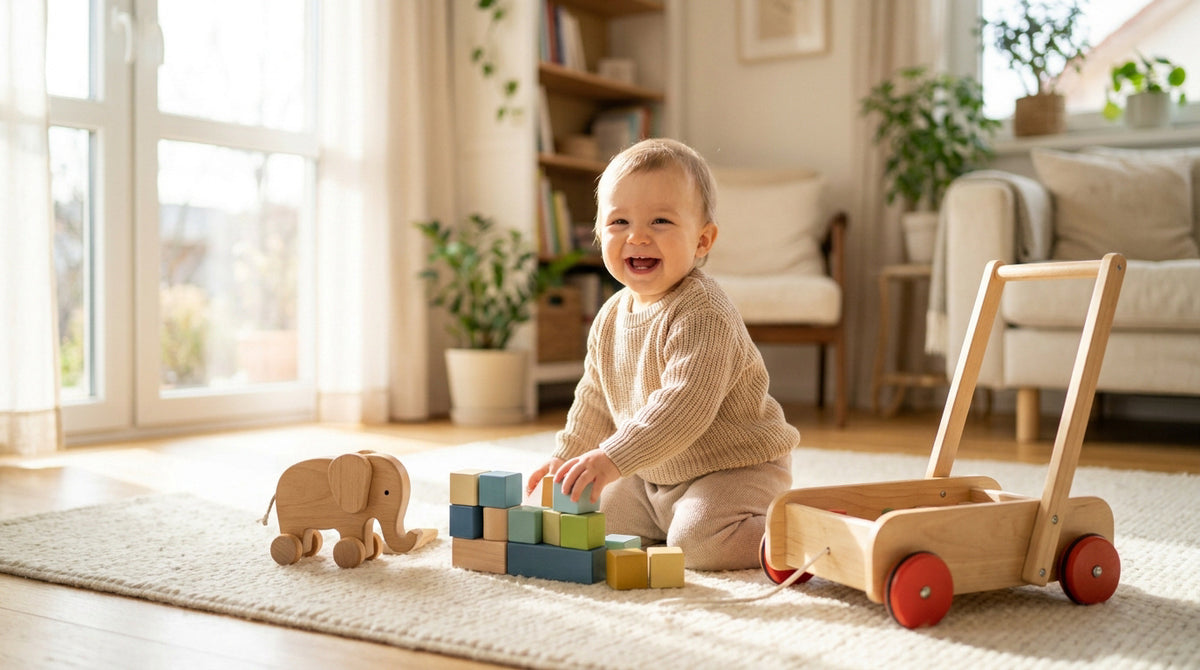
For moving: play tunnel, push-along walker wagon, rocking horse. From 12 months, once the child can stand unaided, a climbing arch becomes relevant: a structure to climb, a rocker once turned over, then a den under a sheet. It can be used until age 6.
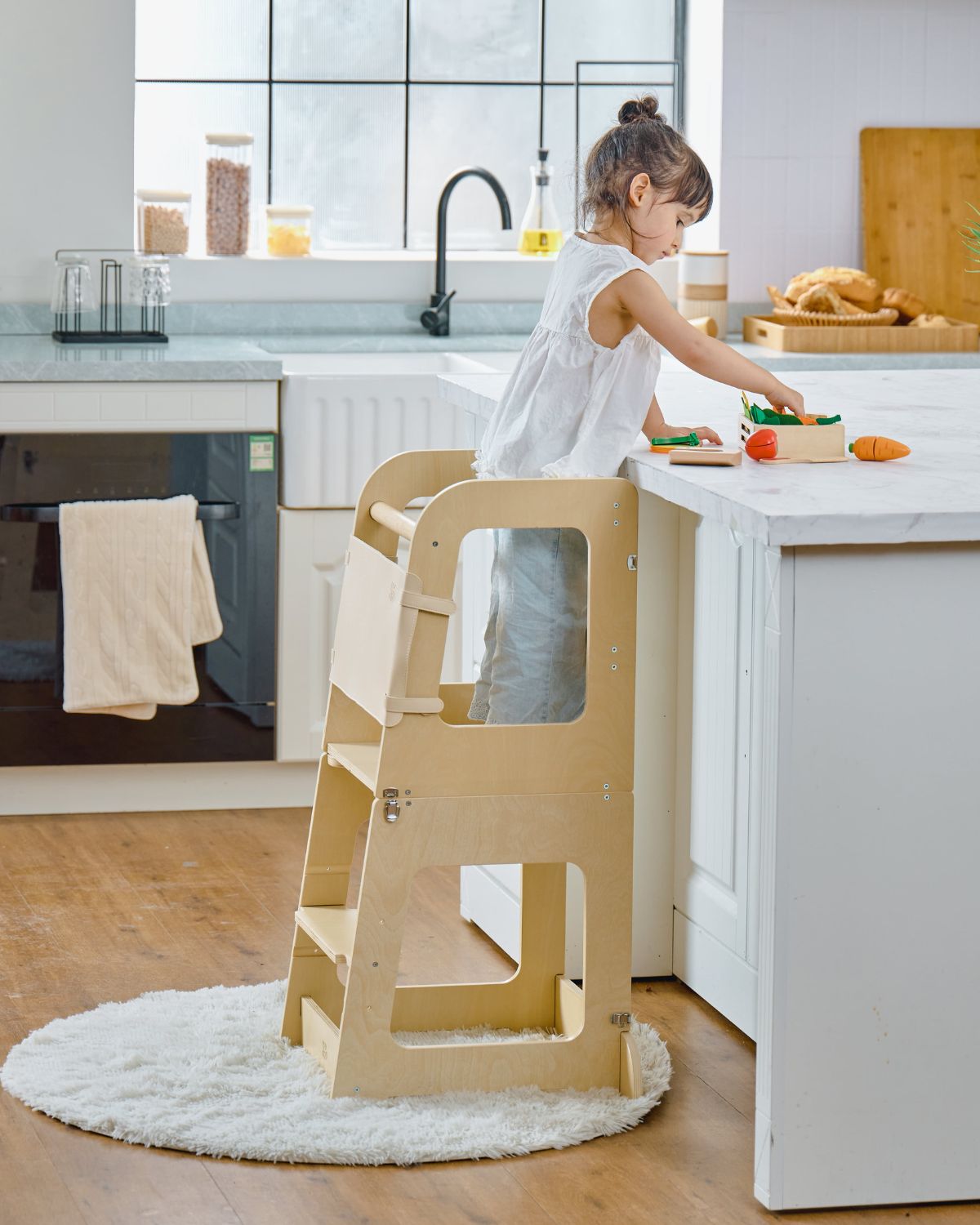
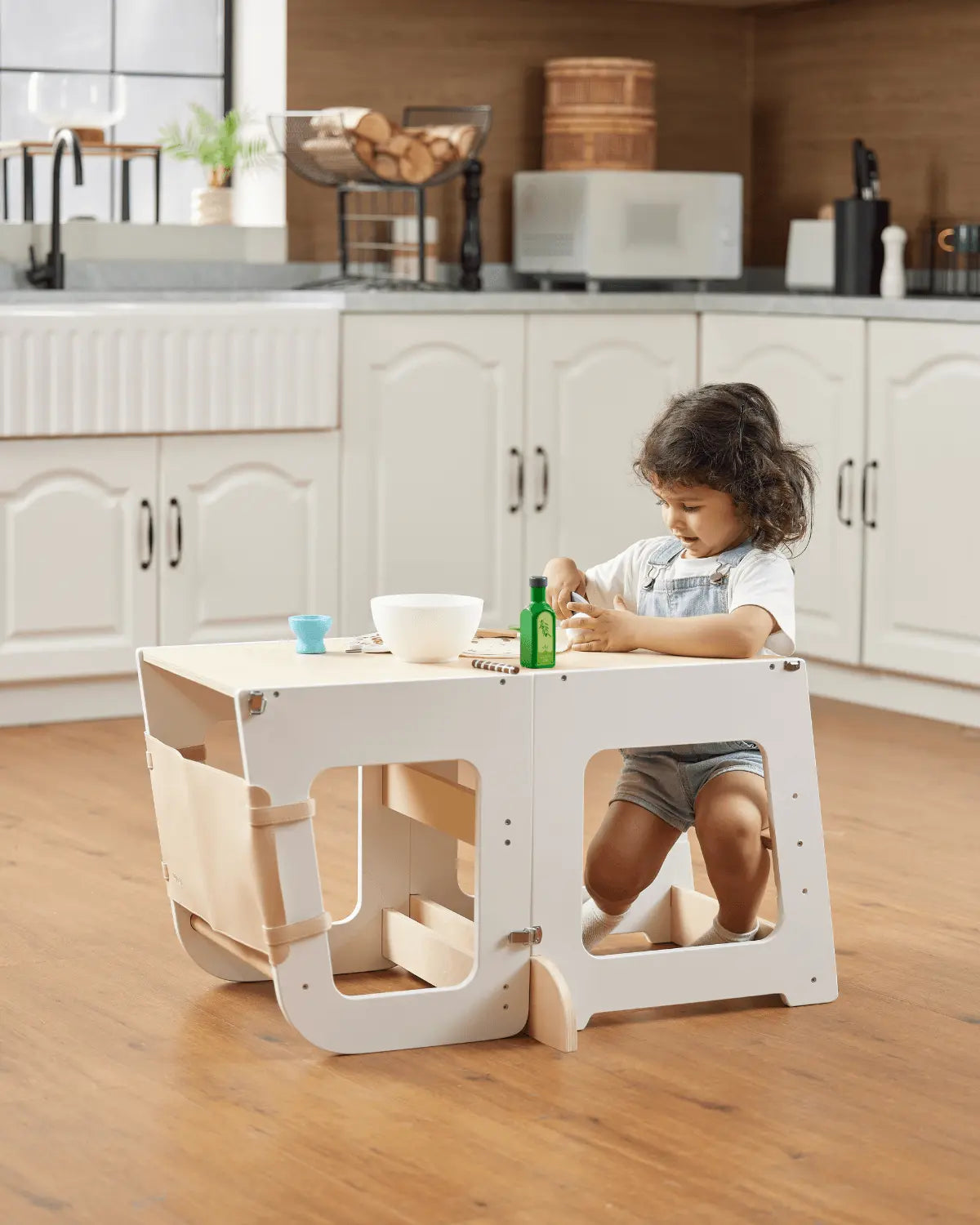
For imitating: a learning tower safely puts the child at worktop height from 12 months. It is often the most used gift day to day, because it serves every day.
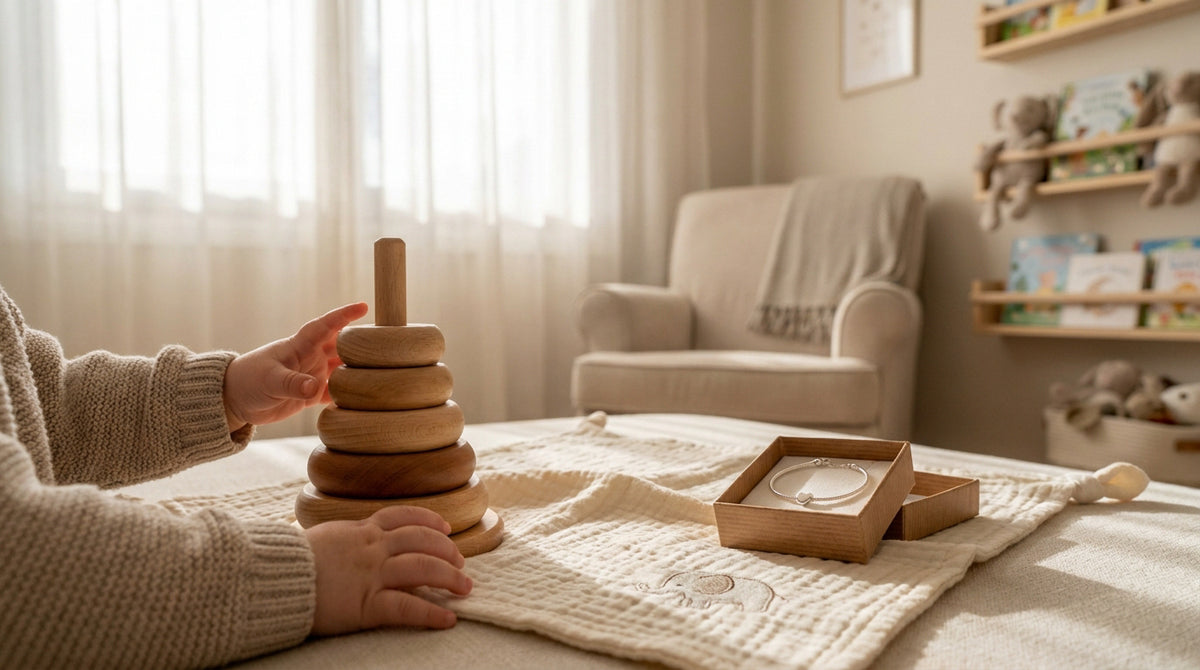
Add stacking blocks, shape sorters and puzzles with large knobs for fine motor skills.
From 3 to 6 years: creating and letting off steam
Symbolic play dominates, and the motor challenges get tougher.
The balance board turns into a bridge, a slide or a cradle depending on the imagination. One object, dozens of uses.
Construction sets and creative materials (modelling clay, paint, cutting out) keep them busy for a long time.
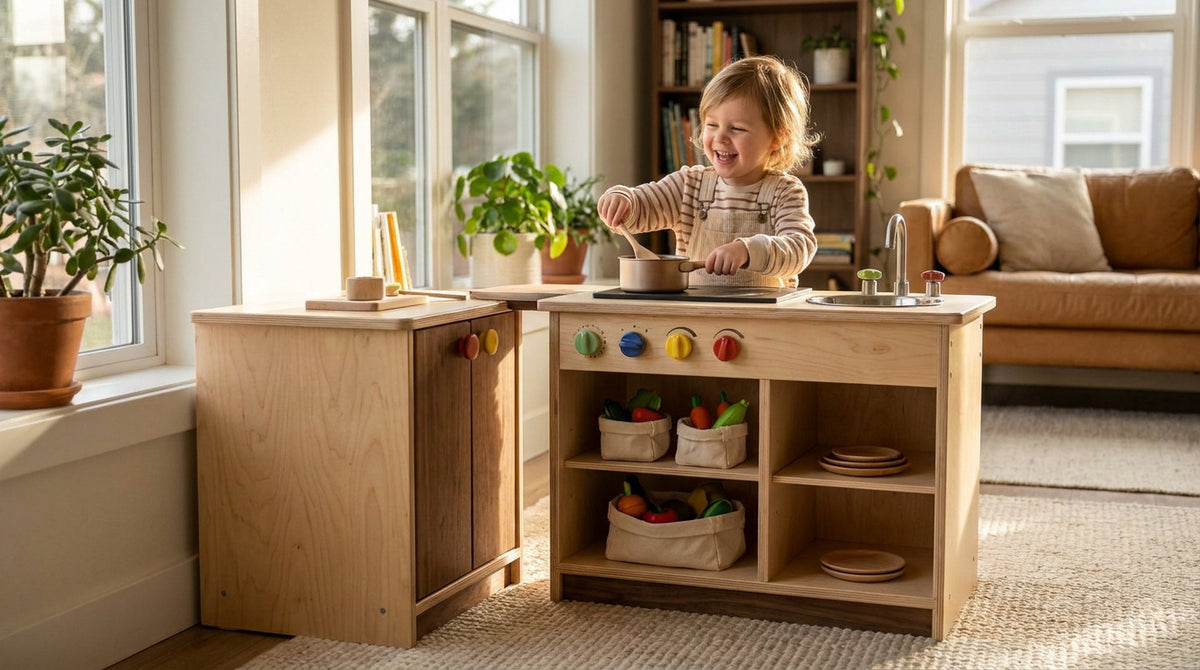
Cooking, for real: at this age, the child can really take part. A wooden knife lets them cut soft foods without a sharp blade, under supervision.
Minimalist structures benefit from staying open-ended: the less the toy imposes a way of playing, the more the child invents.
Limiting the avalanche of gifts
The 4-gift rule
One gift the child needs, one they want, one book, one item of clothing. Simple to explain, effective for reining in impulse buys.
Share it with the grandparents in advance, with a precise list. This avoids duplicates and disappointment on the day.
Club together rather than multiply
For developmental furniture or a big gift, suggest a joint purchase between several people. Most of the time, the idea is a relief for everyone. A gift card also lets those who hesitate contribute without risking a duplicate.
Giving time
An outing, a workshop, a subscription: intangible gifts often leave more lasting memories than one more box under the tree.
Making wooden toys last
Light sanding erases scratches from use. A vegetable oil then nourishes the fibre and protects the wood.
For everyday cleaning: a damp cloth, a little black soap, and above all no soaking. Wood does not like standing water.
Also think second-hand: platforms specialising in childcare are full of pieces in very good condition, and Repair Cafés help you repair rather than throw away.
Ordering in time
For a big gift, don't leave it to the last minute: lead times get noticeably longer in December, and popular models often run out of stock. Late November remains the right time to order with peace of mind.
A successful Christmas rarely depends on the number of parcels. One or two gifts truly suited to the child's age leave more of a mark than a pile of objects opened in ten minutes. Discover our wooden developmental furniture, CE-EN71 certified.
FAQ
How do you know if a wooden or fabric toy is safe?
First check the CE marking and the EN 71-3 standard, which governs the migration of heavy metals and undesirable substances in materials, paints included. The FSC or PEFC labels concern the origin of the wood, and GOTS the organic production of textiles. A strong chemical smell on opening is a warning sign.
Which gifts really last for the youngest?
Objects that grow with the child and are sturdy. Before age 1: wooden rattles, board books, sensory mats. From 1 to 3: a learning tower and a climbing arch, both from 12 months. From 3 to 6: balance board, construction sets. These pieces are easily passed on.
From what age is a climbing arch suitable?
Our arch is designed for children from 12 months to 6 years: the child just needs to be able to stand unaided. Before that, favour a clear floor space and low supports to accompany free movement.
How do you avoid being buried under toys at Christmas?
The 4-gift rule works well: a need, a want, a book, an item of clothing. Give the family a precise list in advance, and suggest a joint gift for the more expensive pieces. Intangible gifts, such as an outing, also lighten the load under the tree.
Can you restore a damaged wooden toy?
Yes, in most cases. Light sanding followed by a vegetable oil restores its shine. For cleaning, a damp cloth with a little black soap is enough, without ever soaking the wood. For more serious breakage, Repair Cafés can help. If the structure is compromised, do not put it back into use.

Written by Charles CAIGNOL





Leave a comment
This site is protected by hCaptcha and the hCaptcha Privacy Policy and Terms of Service apply.