
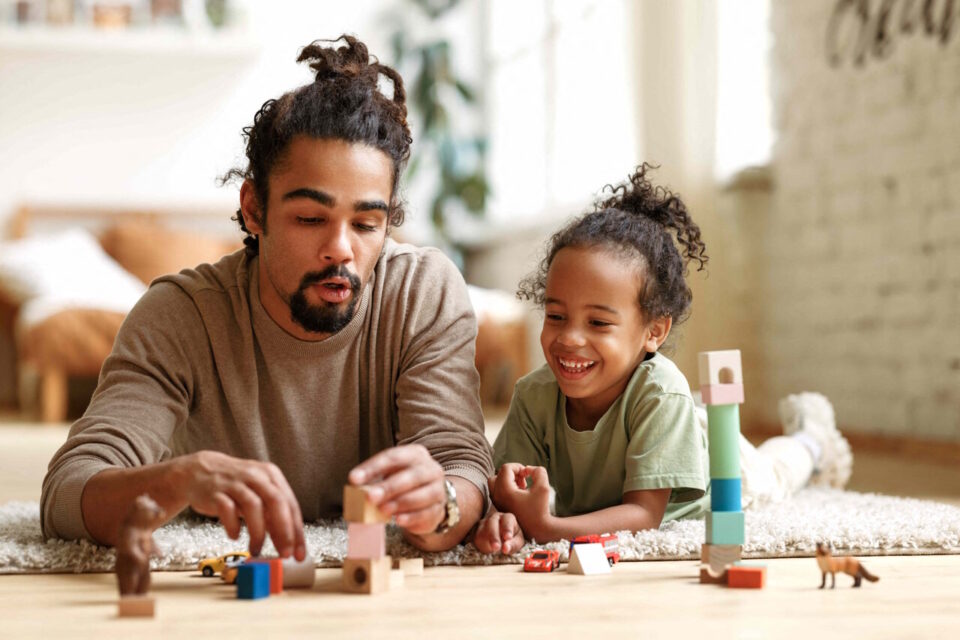
I don't play with my child... Am I a bad parent?
Contents
- Finding it hard to play with your child: a shared reality
- The importance of play in a child's development
- Practical solutions to make play more accessible and enjoyable
- Redefining what being a "good parent" means beyond play
Finding it hard to play with your child: a shared reality
This difficulty is far more common than you might think. Between the demands of daily life and social pressure, many parents feel guilty for not feeling the pleasure expected when playing with their little one.
Fortunately, you should know that you are not alone in this situation.
| Reason | Explanation | Impact on play |
|---|---|---|
| Lack of time | Busy schedules and multiple family responsibilities | Less time available for playful interactions |
| Physical/mental fatigue | Exhaustion linked to daily life or stress | Lower energy and enthusiasm for play |
| Disconnection from games | Difficulty relating to the child's interests | Struggling to enter the child's world of play |
| Social pressure on parents | Societal expectations about parental "perfection" | Constraints that make play less spontaneous and natural |
| Emotional challenges | Stress, anxiety or depression in the parent | Difficulty concentrating or managing emotions during play |
| The child's own traits | Personality or preferences that differ from the parent's | Complex search for activities suited to age and development |
I remember feeling guilty and telling myself "I must be a bad father". Yet these moments of blockage do not reflect our worth as parents. Accepting these difficulties is already a first step towards greater well-being for yourself and for your child.
When my eldest started wanting to build towers with his wooden blocks, I struggled to get down to his level. Between the youngest one's crying and my tiredness, I felt overwhelmed. Fortunately, I learned that there were ways to rediscover that closeness without pressure.
The importance of play in a child's development
Play is an open window onto a child's overall development. Watching a little one explore a toy or invent stories with figurines is witnessing the building of the child's overall development.
- Play stimulates psychomotor development and motor skills
- It supports language learning and creativity
- It develops social skills and empathy
- It improves concentration and emotional regulation
- It encourages independence and self-confidence
Moments of full attention, even short ones, are worth more than passive hours in front of toys. When my eldest builds wooden towers, I make an effort to focus on his smile and his discoveries. This active presence feeds his curiosity and our closeness. The quality of the interaction, not its length, shapes his growth. The Montessori method also offers ideas for encouraging this kind of balanced learning.
As psychologist Florence Millot points out, "free play allows exploration, while guided play provides landmarks. The balance between the two harmoniously nourishes the child's development".
Practical solutions to make play more accessible and enjoyable
The solutions for making parent-child play easier are often simpler than you might think. It is mostly about adjusting our approach and redefining what "play" means in everyday family life.
Play is not limited to toys or planned activities. Even routines can become learning moments. When my eldest is bored, we turn hand-washing into a water adventure with drops of water. 10 sensory activities for your children at the sink (in French) also offers concrete ideas for bringing play into daily chores without any special equipment.
| Child's age | Play activity | Developmental benefit |
|---|---|---|
| 1-12 months | Exploring different textures (fabrics, soft balls) | Stimulates the senses and motor skills |
| 1-2 years | Looking for objects hidden under a cloth | Develops understanding of object permanence |
| 2-3 years | Building tracks with cardboard boxes | Improves coordination and creativity |
| 3-4 years | Playing shop with fabric fruit | Strengthens vocabulary and social skills |
| 4-5 years | Making up stories with figurines | Develops imagination and storytelling |
I discovered that my 2-year-old son particularly enjoys observing details. By following his gaze, I learn to play according to his interests.
Redefining what being a "good parent" means beyond play
Many parents wonder what it means to be a "good parent". What if we questioned this idea that play is the only way to be present?
Societal expectations around parenting are heavy. We are led to believe that a good parent must be a play magician. The reality is more nuanced. Not enjoying play does not mean you do not understand your child.
My daily life has taught me that other moments matter to my son: when I rock him before sleep, when I answer his questions kindly, when I prepare his meals. These simple gestures, repeated with love, weave our bond as much as play sessions do.
Being an engaged parent goes well beyond time spent playing. Active listening when he expresses his emotions, kind coexistence around routines, patience in moments of crisis: these skills deserve just as much recognition.
- Adaptive intelligence to adjust to the child's specific needs
- Emotional intelligence to understand the child's needs
- Relational intelligence to build a quality bond
- Practical intelligence to bring play into daily life
- Educational intelligence to guide natural learning
I remember believing that my difficulty with play made me a bad father. Then I realised that my strengths lay elsewhere: in my ability to understand his non-verbal language, to reassure him when he is scared, to support him in his discoveries.
The truth is that being authentic matters more than being perfect. A parent who acknowledges their limits teaches their child self-acceptance. A parent who says "I need a break" teaches listening to one's needs. Those lessons cannot be found in a box of games.
You are not alone in finding it hard to play with your child. Remember that quality moments, even short ones, count more than quantity. Explore simple everyday activities or Montessori games suited to their age, like those offered by Teedum, to rediscover the pleasure of interacting without pressure. Your attentive presence, not perfection, nourishes their development.
FAQ
How can I help a child who is a bad loser?
It is important not to label a child as a "bad loser", as this can shape their identity. It is better to understand why they react this way to defeat. Offer cooperative games where the goal is shared, so that the process is valued rather than the result.
When faced with a meltdown, adopt a kind attitude, inviting dialogue and offering physical comfort if needed. Avoid minimising their distress or questioning them intrusively. If the problem persists, give them a space to express themselves, as "bad losers" are often sensitive perfectionists.
Is it important to play with your child?
Yes, playing with your child is crucial for their emotional and overall development. Play stimulates motor, cognitive, social and emotional skills. It strengthens the parent-child bond, reduces stress and helps the child manage their emotions.
Children who play regularly with their parents are less likely to suffer from anxiety or sleep problems. Play is an excellent way to release stress for both child and parent, releasing endorphins and promoting well-being. It is also a way for the child to express complex emotions.
When should you worry about a child's behaviour?
It is important to worry about a child's behaviour when it threatens their relationships with others or hinders their emotional, social and intellectual development. Behavioural disorders can show up in different ways, such as outbursts of anger or violence.
Some stress-related behaviours, such as nail-biting or head-banging, are common in children. If these behaviours persist beyond the age of 4, early screening is important, as they can put the child's schooling at risk. It is important to spot worrying warning signs in a child's development in order to put suitable care pathways in place.
What is the most important age for a child?
There is no single age designated as the most important for a child. Every stage of development is crucial and contributes to the child's overall growth. A child's development is a continuous process that begins at birth and continues throughout childhood.
It is important to follow your child's development and provide the stimulation and support they need to reach their full potential. However, it is also important to remember that every child develops at their own pace and there is no need to worry if a child does not reach certain milestones at the exact age given in development guides.

Written by Charles CAIGNOL







Leave a comment
This site is protected by hCaptcha and the hCaptcha Privacy Policy and Terms of Service apply.