
Separation anxiety in young children
Contents
- Understanding separation anxiety in toddlers
- Factors that influence separation anxiety
- Practical strategies to ease separation anxiety
- Managing separation anxiety in specific situations
Understanding separation anxiety in toddlers
Definition and common signs
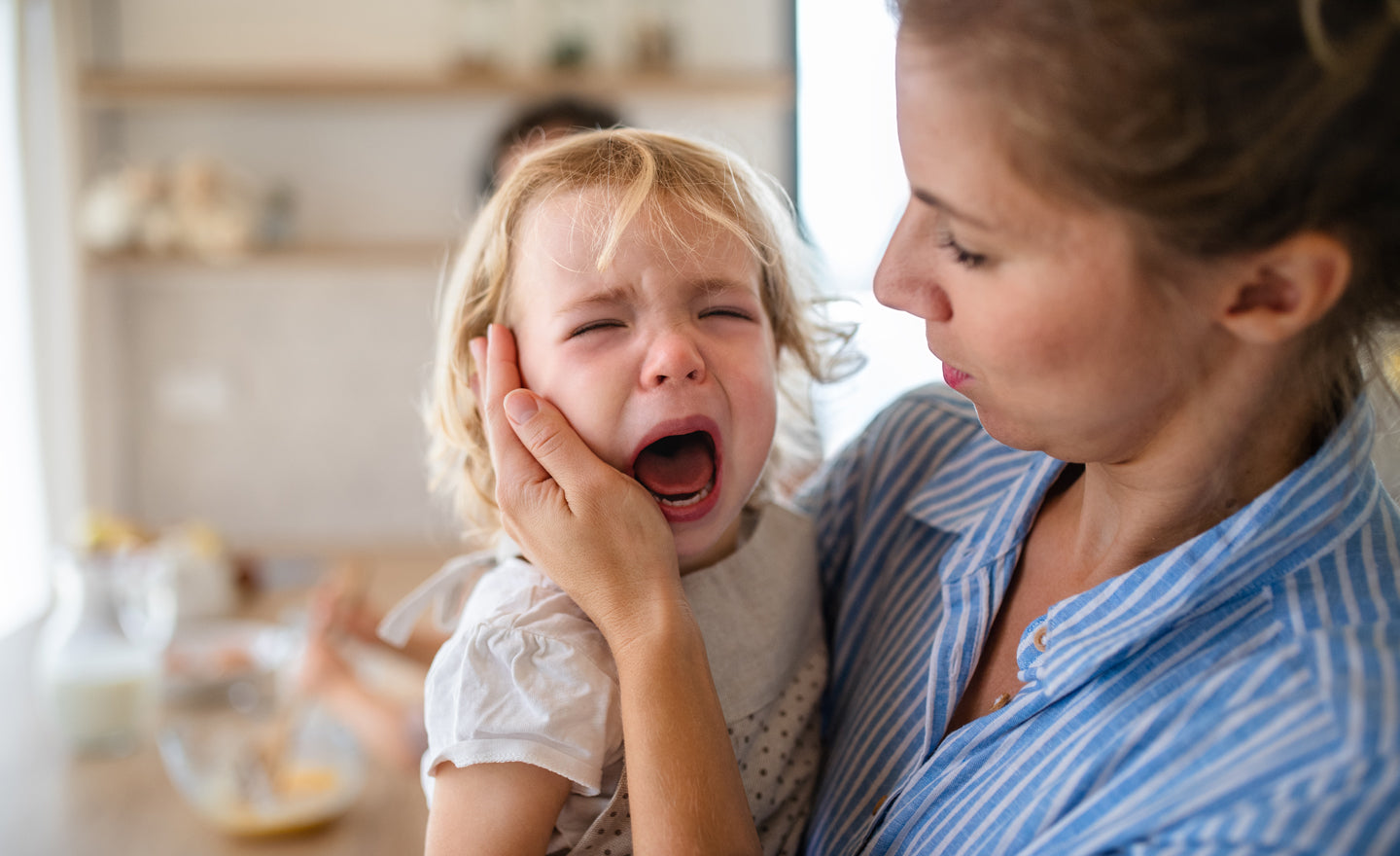
Separation anxiety is a normal stage of development that appears around 8 months. It shows up as crying, discomfort and distress when the child is separated from their main attachment figures. This phenomenon reflects the child's secure attachment to their loved ones.
The signs vary: intense crying when mum leaves the room, clinging to the childminder's arms, anxiously searching for familiar eyes or arms. These behaviours reflect the emerging awareness that people are permanent, although the child does not yet understand that they will always come back.
The normal stages of development
It starts around 6 to 9 months with crying when the mother moves away. It peaks between 10 and 18 months, then gradually decreases around 2 to 3 years. This evolution follows cognitive development and the building of person permanence.
| Age range | Typical behaviours | Key information |
|---|---|---|
| 6-9 months | Crying when parents move away Clinging to attachment figures Looking or listening for loved ones |
Beginning of self-awareness No notion of object permanence yet |
| 10-18 months | Intense crying Refusing to fall asleep without a parent present Tantrums during separations Constantly seeking parents |
Peak of separation anxiety Development of mobility and awareness of surroundings |
| 18 months - 3 years | Gradual acceptance of separations Use of transitional objects (comforter) Repeated questions about when parents will return |
Acquisition of person permanence Goodbye rituals become possible |
This anxiety reflects a healthy stage of emotional development. It shows the building of secure attachment and self-awareness. Daily crying at nursery or excessive clinginess are normal expressions of this relational awareness.
Telling normal anxiety apart from an anxiety disorder
When it persists beyond age 3 or disrupts school and social life, anxiety can become pathological. A child who systematically refuses to sleep alone or has repeated stomach aches before every separation deserves professional follow-up.
- Excessive fears for the safety of loved ones, unrelated to reality
- Systematic refusal to go to school or take part in activities
- Repeated physical complaints during separations (nausea, headaches)
- Constant anxiety, not only linked to specific separations
- Impact on sleep, eating or social interactions
Poorly managed anxiety can affect the child's future independence. Complicated social relationships or imperfect emotional regulation can follow. Caring support from parents plays a key role in the natural resolution of this period of distress.
Factors that influence separation anxiety
The child's temperament and anxiety
Every child reacts differently to separation. My 2-year-old eldest shows his distress through intense crying fits, while my 13-month-old youngest expresses his fear through constant restlessness. This diversity reveals the importance of innate temperament.
Highly sensitive children experience every separation as an ordeal, while more resilient ones adapt quickly. A shy child may constantly seek your presence, whereas a cheerful temperament turns departure into a goodbye game. For my eldest, I introduced tactile rituals, such as a kiss on the hand, while my youngest prefers a personalised comforter. Adapting your approach to the child's temperament makes anxiety easier to manage.
The impact of the family environment
Our own anxiety is often passed on unconsciously. When I hide my stress before leaving, my eldest picks up on this unease and becomes more agitated. On the other hand, when I calmly announce my departure, he handles the separation better.
To create an emotional cocoon, build in soothing routines. I set a fixed bedtime, punctuated by a storybook reading. Tools such as the Pikler triangle also support motor development, which can contribute to a sense of security and independence in the child. Early-learning games build confidence. The Montessori tower also encourages daily independence, the foundation of a calm separation. These concrete tools, combined with transparent communication, soothe anxieties.
Practical strategies to ease separation anxiety
Preparing the child for moments of separation
I always explain things simply. "Daddy is going to work now" said kindly is better than sneaking out. My 13-month-old baby needs to understand that I will come back, even if his brain does not yet grasp the concept of time. I show my watch and say "when the hands are there, I will come and get you".
Creating soothing separation rituals
Here are examples of separation rituals suited to the child's development and easy to build into the daily routine.
- Consistent departure routine: Create a daily ritual (kisses, reassuring phrase, song) to anchor emotional security.
- Transitional object: Offer a comforter or a photo to soothe separation anxiety.
- Visual preparation: Use a calendar or pictures to explain the reunion, strengthening secure attachment.
- Clear communication: Say a brief, honest goodbye to manage anxiety without dramatising.
- Reunion plan: Describe what you will do together after the separation, encouraging emotional independence.
My daily ritual includes a kiss on each cheek and a sung "see you later". This consistency reassures my child, even if tears sometimes come. The nursery staff use the same body language, reinforcing continuity.
Using transitional objects
A comforter is more than a simple piece of fabric. It is a substitute for attachment, soaked in my scent and in motherly cuddles. For my baby, this soft piece of fabric represents my presence when I am not there.
I introduced this sensory comfort from 6 months, offering it as a sleep companion. Now it has become an ally for separations. He takes it everywhere, even to the childminder's. We have one at home and one at nursery, to avoid dramas if it gets forgotten.
For parents, it is a relief to know their child is soothed by a personal object.
Managing separation anxiety in specific situations
Starting nursery or going to a childminder
My eldest needed two weeks to adjust to nursery. We brought his comforter and set up a departure ritual to reassure him. The nursery staff adopted our evening habits to ease the transition, building a bond of trust between the child and the team.
A gradual settling-in period allows the child to become familiar with the professionals. I communicate regularly with the nursery worker to maintain familiar landmarks. This educational continuity soothes separation anxiety and builds a relationship of trust between all the adults involved.
Separation anxiety, a normal stage of development, reflects the secure attachment between the child and their attachment figures. By setting up soothing rituals and using transitional objects, parents support their toddler with kindness. Every cry hides a request for love: by responding consistently, you lay the foundations of solid trust, the beginnings of calm independence. At Teedum, our resources designed by Montessori experts help families turn these moments into opportunities for mutual reassurance.
FAQ
What happens if separation anxiety is not treated?
If separation anxiety is not addressed, it can develop into a separation anxiety disorder, affecting the child's daily life and well-being. Excessive and persistent fears linked to separation can disrupt social and school activities.
In the long term, this can lead to school refusal, difficulty sleeping alone, and recurring stomach aches or headaches. Parental anxiety can make the situation worse. Early support, such as behavioural therapy, is essential to help the child develop healthy coping strategies and avoid future complications.
When does separation anxiety stop?
Separation anxiety is a normal stage that generally appears between 6 months and 3 years, with a peak often seen around 18 months. It then tends to decrease gradually, although it can reappear during major changes in the child's life, such as a new childcare arrangement or a house move.
If this anxiety persists or returns after age 3, it is then called separation anxiety disorder. In most cases, it resolves within a few days or weeks, the time it takes for the child to adjust. However, if the child's state seems more intense and prolonged than would be expected, it is important to consult a professional.

Written by Charles CAIGNOL






Leave a comment
This site is protected by hCaptcha and the hCaptcha Privacy Policy and Terms of Service apply.