

Saying no: positive parenting for children
Contents
- The importance of "no" in the child's development
- How to say no in a positive, constructive way
- The "no" phase in children: understanding and responding
The importance of "no" in the child's development
Why "no" is fundamental for the child
Contrary to popular belief, "no" is not a barrier but a landmark. It helps the child build themselves by giving them clear reference points to navigate a sometimes bewildering world. Saying no means helping them learn limits, which is reassuring for them (Naître et grandir).
As a parent, I have noticed that my eldest feels safer when expectations are clear. "No" helps them identify what is allowed or forbidden, which structures their world. It is an essential foundation for their self-confidence and their sense of security when exploring the world.
"No" as a tool for learning rules
At home, every calmly stated "no" becomes a life lesson. The child gradually understands what is acceptable or not, and absorbs the family's values. It is gradual but solid learning, which prepares them to live well in society.
| Age | Functions of "no" | Recommended adaptation |
|---|---|---|
| Baby (0-12 months) | Protect from immediate dangers and set physical limits | Use a firm tone with physical action (move the child away), few verbal explanations |
| Toddler (1-3 years) | Learning basic rules and structuring a secure framework | Simple words, gentle tone, offering acceptable alternatives (e.g. "No, that's fragile. Let's play with the blocks instead") |
| Older child (3-7 years) | Building values and responsibilities, developing self-regulation | Detailed explanations, validating emotions, involvement in drawing up family rules |
| School-age child (7-13 years) | Maturing of abstract thinking and understanding of social consequences | Reasoned dialogue, linking to educational principles, joint search for alternative solutions |
A kind "no" prepares the child to live within a social framework. Research in positive parenting shows that it encourages self-regulation and the management of desires. It is an essential skill for their future, which I have seen concretely with my own children.
The balance between affection and authority
Between cuddles and limits, I try to listen without giving in to every request. A "no" said gently does not prevent affection. Quite the opposite: a clear framework brings hearts closer by establishing real emotional security.
I remember a period when I often gave in to avoid tears. The result? My child became more demanding, less settled. Setting regular limits, with kindness, calmed them. Scientists explain that without reference points, the child feels lost in the face of life, like a boat without a rudder. The Montessori approach, for example, values the child's independence while respecting clear frameworks. Likewise, developing motor skills in a safe environment, as encouraged by the Pikler triangle, supports the idea of reassuring limits.
How to say no in a positive, constructive way
Techniques for a kind refusal
When my child asks for a toy just after receiving another one, I take a deep breath. I remind myself that a refusal can be spoken gently, without giving in. This approach preserves our bond while teaching them to manage delayed desires.
- Offer a choice between 2 options to encourage the child's independence
- Use "I" statements to express your needs without rejecting the child
- Validate the child's emotions before explaining the limit
- Redirect attention towards an acceptable activity within the rules
I try hard to explain my decisions. "I understand you want that toy, but we decided to buy one every month." This wording acknowledges their disappointment while recalling our values. This approach sharpens their emotional intelligence while clarifying expectations.
Adapting "no" to the child's age
At one year old, my baby grabs my glasses. I gently take them back, saying "no" in a calm tone, without a long explanation. Adaptation is essential at every stage of development, as confirmed by many blogs dedicated to childhood, in particular the blog dedicated to children aged 3 to 6.
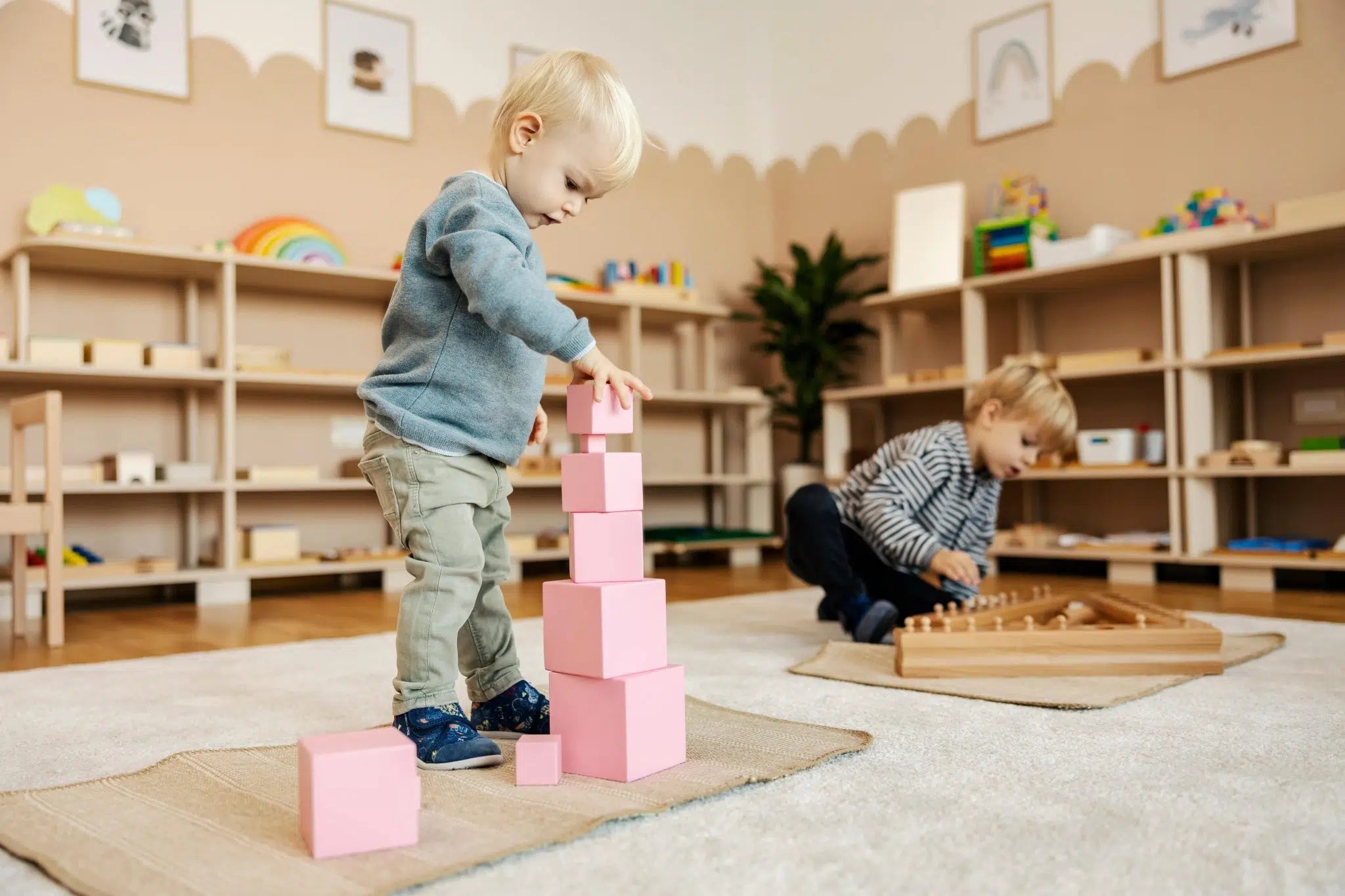
Faced with a 3-year-old who wants to climb on a table, I use simple words. "No, that's dangerous. Let's climb on your Montessori tower instead." The explanations stay brief but clear, accompanied by alternatives. Their reactions vary from day to day, sometimes a sudden tantrum, sometimes a simple nod.
Situations that call for a firm "no"
An immediate "no" is essential when safety is at stake. A child running towards the road, another slapping a playmate: these moments demand a clear limit. It is not a lack of love, but a vital necessity.
To stay firm and kind, I kneel down to their level. "I have to stop you because it's dangerous, but I'm here to help you feel better." This sentence sets the limit while validating their emotions.
Consistency in applying limits
Between dad, mum and the grandparents, the rules sometimes waver. Yet consistency is the key. When the same limits apply everywhere, my child feels secure. Fluctuations create confusion.
To anchor this stability, a few big rules. No screens in the evening, meals together, mutual respect. These principles apply at home and elsewhere. When the grandparents come, we talk about these reference points to preserve this reassuring continuity.
The "no" phase in children: understanding and responding
Recognising the opposition phase
Between 18 months and 3 years, my youngest went through this important stage. They answered everything with a firm "no", even when they agreed. It is their way of saying "I am a person in my own right" while testing my reactions.
They often refused to eat, get dressed or sleep. Every daily routine became a challenge. These repeated behaviours sometimes put me to the test, but I learned to see them as normal stages of development.
The reasons behind the child's opposition
Behind these insistent "no"s lies a need to assert themselves. The child discovers their own will and tests their ability to influence their environment, as highlighted by Faber and Mazlish in their book on parent-child communication.
They experience an internal conflict between their desire for independence and their cognitive limits. I saw this when my 2-year-old son wanted to do everything alone but got angry at not managing. The frustration described by psychologists translated into a systematic "no".
Responding effectively to opposition
I learned that it was better to defuse the tension rather than get into pointless power struggles. Offering choices, validating their emotions, and maintaining limits without getting angry helped me a lot.
- Welcome the frustration without judgement to make the child feel emotionally secure
- Use short, calm sentences to avoid escalation
- Offer alternatives suited to the child's age and context
- Turn the refusal into a game to encourage cooperation
I make sure to preserve our bond despite the tensions. When they are too stubborn, I breathe deeply and rephrase my request gently. These moments remain essential steps for them to learn to negotiate and accept the limits of life in society.
Saying "no" is not a sign of severity, but a pillar of kind parenting. By setting clear limits, you give your child a secure framework for learning to manage their emotions, respect rules and build their confidence. To achieve this, explain your reasons, offer choices suited to their age and stay consistent. With tools like Teedum's, turn every refusal into a learning opportunity. Today, every kind "no" paves the way towards fulfilling independence for your child.
FAQ
How does "no" encourage empathy?
Although there is no obvious direct link, "no" plays an indirect role in the development of empathy in children. By establishing clear limits, it helps the child understand other people's limits, thus encouraging mutual respect.
Moreover, "no" contributes to building the child's identity. By internalising what is acceptable or not, they develop a self-awareness that is essential for putting themselves in others' shoes and understanding the impact of their actions.

Written by Charles CAIGNOL






Leave a comment
This site is protected by hCaptcha and the hCaptcha Privacy Policy and Terms of Service apply.